![OA_Logo-600x600-1.png]](https://www.omnially.com/hs-fs/hubfs/OA_Logo-600x600-1.png?height=40&name=OA_Logo-600x600-1.png)
Where to find it: Manage → Devices
A device is a physical media player registered in the dashboard: the hardware unit that connects to a screen and drives your content onto it. Each device has a location name, a serial number, and a device type that describes its hardware, and it belongs to one or more companies.
A device’s type determines what content it can play, what remote commands it supports, and what the dashboard shows when you open it. Once a device has been linked, it can receive content updates, report its status, and be managed remotely from the Devices section.
Each device has its own settings, status information, and activity history.
Device Types
Every device is one of a few platform types, which determines what it can play and how it’s managed:
|
Type |
What it is |
|
ShowCTRL |
Comprehensive multimedia system. Allows multiple playlists, tables and items arranged in a canvas together with other custom widgets. |
|
SelfCTRL |
Advanced custom application. Integrates external programs and modules into the dashboard. Can perform headless tasks and link to third-party input devices. |
|
External Device Bridge |
Cloud-based monitoring and maintenance. Links a third-party controller to a parent device, enabling remote feedback, updates and actions. |
Before You Begin
Before managing devices:
• Make sure the device has been installed and configured.
• Confirm the device has network connectivity.
• Verify that you have permission to access device management.
Accessing Devices
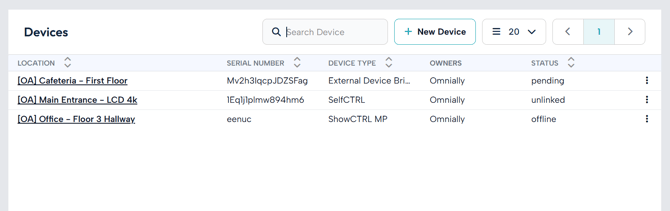
The Devices page displays all devices available to your organisation. From here you can:
• View device status
• Search for devices
• Organise devices into groups
• Open device details
• Review device health
Understanding Device Statuses
A device’s status lets you see its condition at a glance.
|
Status |
Meaning |
|
Online |
Connected and communicating normally. The device can receive content updates, report activity, and accept remote commands. |
|
Offline |
Not currently communicating with the platform. |
|
Unlinked |
A device record exists, but no physical device is associated with it yet. |
|
Pending Approval |
The device has connected but hasn’t yet been approved for use. |
When a Device Is Offline
A device usually goes offline because of a network outage, a power interruption, a hardware issue, or another connectivity problem. As a first step, check that the device is powered on and connected to the network.
When a Device Is Pending Approval
A newly connected device waits for approval before it can be used. Review and approve it before assigning content. (Approval is handled by a senior administrator.)
When a Device Is Suspended
Suspending a device pauses it on purpose. While suspended, it continues to show whatever content it last received, but it stops reporting to the platform until it’s resumed.
Searching for Devices
To Find a Device
1. Open the Devices page.
2. Use the search field.
3. Enter part of the device name or identifier.
4. Select the device you want.
Best practice: use clear device names that capture location, purpose, or department, for example Main Lobby Display, Foundation Donor Wall, or Event Center Kiosk.
Device Groups
Device groups organise multiple devices into logical collections, which makes them easier to find and manage (especially in larger deployments). Common ways to group devices include:
|
Group by… |
Examples |
|
Location |
Main Lobby, Reception Area, Event Center |
|
Function |
Donor Walls, Digital Signage, Interactive Kiosks |
|
Department |
Marketing, Development, Visitor Services |
Grouping devices makes it easier to locate them, manage larger deployments, review device health, and apply operational processes consistently.
Viewing Device Information
Selecting a device opens its Device Details page, which commonly shows:
• Device name
• Device status
• Last communication (check-in) time
• Assigned content
• Activity history
• Health information
Note Devices check in regularly to report how they’re doing, and that check-in time is what the platform uses to decide whether a device has gone quiet. On supported devices, the details page also shows a live screenshot of what’s currently on the screen, so you can see exactly what’s showing without being on-site.
Best Practices
• Use meaningful device names. Descriptive names make troubleshooting and reporting much easier.
• Organise devices into groups. Grouping improves visibility and management.
• Monitor device status regularly. Review offline devices promptly to reduce downtime.
• Verify devices after installation. Confirm that new devices appear online before publishing content.