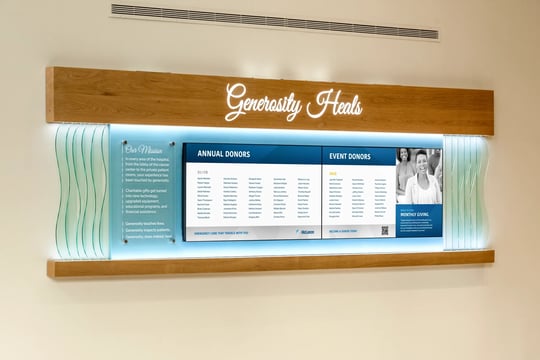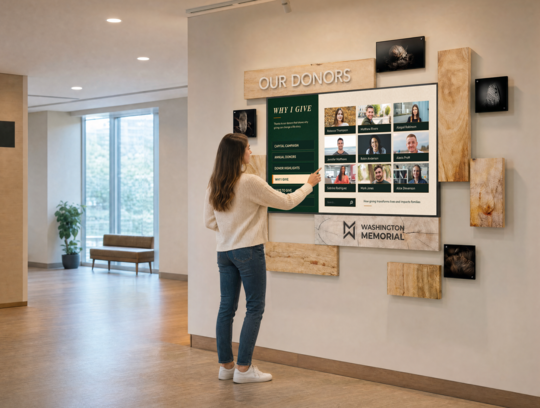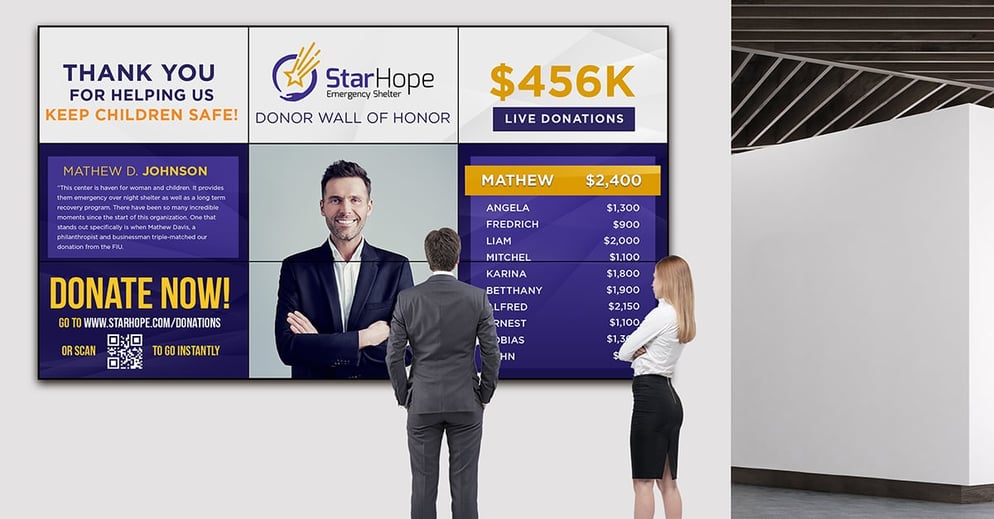
A donor appreciation event is a gathering a nonprofit hosts to thank its donors with nothing asked in return: a building dedication and ribbon cutting, the unveiling of a donor's name or story, a recognition reception, a legacy society dinner, a scholarship luncheon, a remembrance ceremony, or National Philanthropy Day. Fundraising events raise the money. Appreciation events are the stewardship half of the calendar, where donor retention is decided, and they are where a digital donor recognition wall does its most personal work, because the whole point of the night is that a donor sees their name, their story, and the impact of their gifts. OmniAlly designs, builds, and installs digital donor walls, digital donor plaques, and donor experience centers that these events are built around.
A donor appreciation event is a gathering a nonprofit hosts to thank its donors with nothing asked in return: a building dedication and ribbon cutting, the unveiling of a donor's name or story, a recognition reception, a legacy society dinner, a scholarship luncheon, a remembrance ceremony, or National Philanthropy Day. Fundraising events raise the money. Appreciation events are the stewardship half of the calendar, where donor retention is decided, and they are where a digital donor recognition wall does its most personal work, because the whole point of the night is that a donor sees their name, their story, and the impact of their gifts. OmniAlly designs, builds, and installs digital donor walls, digital donor plaques, and donor experience centers that these events are built around.
This guide is written for the fundraising professionals who plan these nights. It covers eight donor appreciation event ideas for nonprofits, from the dedication ceremony to the donor's own anniversary, and answers the same questions for each: what the recognition problem is, what the wall shows on the day, what a person does afterward, and what that produces a year later. It closes with a 30-minute dedication ceremony program, what to put on the wall at a dedication, who to invite, and what the thank-you note and the appreciation gift look like after the event.
Where Appreciation Events Fit in Donor Recognition Strategies and Donor Retention
At a fundraising event the wall is a scoreboard. At an appreciation event it is the reason the room exists. The donor is invited to see something: a name going up, a story going live, a building that now carries their family's name, a fund's year in the lives it changed.
The wall shows that something at the moment the donor is standing in front of it, a person photographs the donor beside it, and the photograph returns six months later as the check-in that keeps donor relationships warm between gifts. On a traditional donor wall, that moment happens once. On a digital wall it happens as often as the calendar allows, because the content can be set to appear before a visit and step back afterward. That is the way to show appreciation to every donor by name, in the building, with a photograph, and it is the part of a donor recognition plan that makes donors feel seen between gifts. There are many ways to show appreciation to donors. Thanking your donors in person, by name, in front of their own recognition is the most specific, and specific is what reads as genuine appreciation.
8 Donor Appreciation Event Ideas for Nonprofits and What the Recognition System Does at Each
1. The Building Dedication, the Exclusive Donor Preview, and the Ribbon Cutting
The dedication ceremony is the finish line of a capital campaign: the building is done, the donors who funded it are in the room, and the organization says in public what their gifts built. West Virginia University's events protocol describes the standard form: a program that recognizes donors, architects, contractors, public officials, and other major stakeholders, runs no longer than 30 minutes, gives each speaker two to three minutes, and schedules any naming concurrently with the dedication, with a facility tour immediately after. The recognition problem is that public recognition from the podium reaches a few major donors while the campaign had hundreds, and that the plaque unveiled that day is the last time the recognition changes. Many nonprofits add an exclusive donor preview the evening before the public ribbon cutting, and the same problem applies there.
On the wall: the campaign's full donor list by giving level, including the in-kind gifts from the architect, the contractor, and the trades, ready on the screen the tour ends in front of, so every donor who gave finds their name that day, not only the ones who spoke; the building's story and the before-and-after; the naming shown beside the space itself on a digital plaque. Afterward: each donor's thank-you carries a photograph of their name in the finished building, and the campaign panel stays up as the wall's first chapter while the next campaign begins.
2. The Unveiling
The unveiling is the wall's most native moment: a donor comes in person to see their own recognition go live, a new name, a new giving level, a Why I Give story, a tribute to a parent, and is photographed beside it. On a traditional donor wall this happens only when a panel is installed. On a digital wall it can be arranged for any donor at any time, which makes it the lowest-budget idea on this list, and the recognition problem is simply that most organizations never schedule it.
On the wall: the donor's feature set to appear before the visit and step back afterward, so the screen shows their story when they walk in. It is the simplest way to show a donor the impact of their gift, and a donor may want the family there, so ask. The Newman Center serving Penn and Drexel runs its display this way: when a donor's family is expected, a personalized donor page is set to appear before the visit, and a grandchild can walk up and find a grandfather's photograph and story directly. Afterward: the photograph goes to the donor that week and returns six months later as the check-in, with no ask attached.

3. The Donor Appreciation Reception, Recognition Night, or Volunteer Appreciation Night
The appreciation reception is the stewardship-only event: a cocktail reception, a dinner, or a recognition night held once or twice a year for a giving society, a campaign's donors, or the whole donor community, with no ask. A volunteer appreciation night runs the same way, with the volunteer honor roll on the wall. It can be held at a restaurant or a rented venue, but it works best under your own roof, in front of your own recognition, and that is the recognition problem: most organizations hold it somewhere the donors' names are not.
On the wall: the giving society being honored, each member's name in rotation with the stories the society funded; the year's impact in the lives it changed; and nothing asking for money. Fresh Start Women's Foundation hosts frequent events in its own building, and its lobby donor wall is the storytelling piece for guests, showing who stands behind the mission and why. Afterward: every guest is photographed beside their name, and the board members who attended call the major donors the following week, a peer-to-peer thank-you that lands warmer than any letter.

4. The Legacy Society Dinner
The legacy society dinner honors the long-term donors who have put the organization in their estate plans, people whose gifts will arrive after their lifetimes and who are recognized while they are living. A legacy society is the clearest measure of donor loyalty an organization has. The recognition problem is delicacy and scale: a legacy society grows slowly, its members are deeply personal about why they joined, and a long engraved list in a hallway serves neither.
On the wall: the society's members by name, surfacing periodically alongside the stories of the people whose bequests have already arrived, with a line of tribute for each member who wants one; at the dinner, the society's panel on screen in the room. Afterward: a new member is added without touching the hardware, and the family of a member who has died sees the name move from the living list to the remembered list the week it happens.
5. The Scholarship Luncheon and the Fund Report
The scholarship luncheon is where an endowed fund's donor meets the students the fund supports at a university or college, and where each named fund's year is reported. The recognition problem is the report: assembled by hand, mailed as a PDF, and sent to the founding donor long after the family has grown past them.
On the wall: each named fund's year as a feature, the scholars named, the chair funded, the equipment bought, with the fund's donors beside it; at the luncheon, the fund's feature on screen while the donor sits with the scholars. Afterward: the invitation to next year's luncheon replaces the mailed report, and the family is photographed beside the fund's feature for the next cycle.


The Advantages of Digital over Traditional Donor Walls
Learn the top reasons nonprofits are moving away from traditional donor walls and embracing the flexibility digital offers.
6. The Board Walk and the Gathering
Board and committee meetings, leadership councils, and small cultivation gatherings bring insiders into the building on a schedule. The recognition problem is that these are the people most responsible for the culture of philanthropy and they walk past the donor wall without stopping.
On the wall: the meeting opens at the wall, with the names added since the last meeting, the campaign's progress, and the story the development office wants the board to carry out of the room. Afterward: board members leave with a reason to call a donor they know, the guest a board member brings is often the next new donor, which makes the board walk the quietest form of donor acquisition, and the wall becomes the thing they show visitors.
7. The Remembrance Ceremony and the Donor's Date
Hospitals hold Tree of Life ceremonies, hospices light candles on an anniversary, synagogues mark yahrzeit, and every organization has gift anniversaries and years-of-giving milestones. These dates belong to the donor or the person honored, not to the organization, and the recognition problem is that an engraved wall cannot mark a date at all.
On the wall: a memorial or tribute name comes back on its date, with the family's line of remembrance; a gift anniversary surfaces the donor's name and story the week it falls; a consecutive-years milestone is marked by name for recurring donors. Afterward: the invitation back goes out with the date, the family comes to see the name, and the photograph returns the next year.

8. National Philanthropy Day and Donor Appreciation Day
National Philanthropy Day falls on November 15, founded in the 1980s and first celebrated in 1986, and it is observed through Association of Fundraising Professionals chapter events that honor outstanding donors, volunteers, and corporate partners. Many organizations run their own donor appreciation day around it, in the weeks before year-end giving. The recognition problem is that the day comes and goes on social media.
On the wall: the organization's own honorees for the year, a Why I Give story from each, and the thank-you to every donor by name in rotation through the week; the lobby becomes the observance, a week of public gratitude for the community's generosity. Afterward: the honorees' features stay up through the year-end campaign window, where they do the quiet work of making the case.
A 30-Minute Dedication Ceremony Program
Set the donor recognition goals for the night before the program is written: every donor finds their name, every major donor is photographed, and every photograph goes out within a week. If you are installing a donor wall for the dedication, the donor list and the stories have to be approved weeks before the ceremony, so start the review with the campaign office early; after that, new names arrive from your donor management system on their own and the list is current on the night.
- Arrival (before the program): music or a performance as guests arrive, greeters at the door, the wall showing the campaign's donors so guests find their names before the ceremony begins.
- Welcome and acknowledgment of guests (3 minutes): the executive, dean, or director as emcee; the donors, architect, contractor, and public officials acknowledged by name.
- The story of the project (5 minutes): why it was built and what it changes, told by the person who lives it, a clinician, a student, a program director.
- Recognition of contributors (5 minutes): the lead donors recognized from the podium, and the full donor list on the wall behind the speaker so the room sees everyone.
- The donor's remarks (3 minutes): the naming donor or the family, if they wish to speak.
- The naming and the unveiling (5 minutes): the plaque or the digital plaque at the space revealed, the name shown on the wall at the same moment, the photograph taken.
- Ribbon cutting and closing (3 minutes): the people chosen in advance cut the ribbon; a closing word or blessing.
- Tour and reception: the tour ends at the wall, where the recognition stays on screen through the reception.
School districts run a near-identical program; Pasco County's dedication and ceremony guide caps the program at 30 minutes, gives each official three minutes, and plans music, greeters, reserved seating, and a backup location. Confirm speakers a week out, set each speaker's time and order in advance, and decide beforehand who cuts the ribbon.
Donor Recognition Ideas for the Wall at a Dedication
- The full campaign donor list by giving level, so the donors who did not speak find their names.
- The naming, shown on the wall at the moment it is unveiled at the space, and afterward on a digital plaque beside the door.
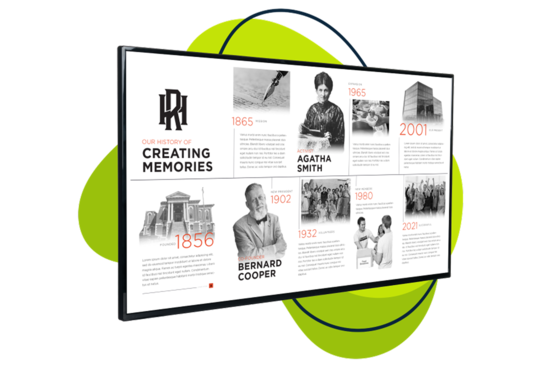
- The building's story: the before-and-after, the groundbreaking, the beam signing, the day the doors opened.
- What the building does: the program, the patients, the students, the first year's numbers when they arrive.
- The tribute and memorial gifts made toward the campaign, with the families' lines of remembrance.
- The next campaign, quietly, because the dedication is also the first day of it.
- Nothing for the donors who asked to stay anonymous. Privacy is part of the recognition policy, and the wall follows it.
Who to Invite, and How to Show Appreciation to Each Type of Donor
Invite by type of donor and by what the wall can show them. Major donors and top donors by giving level come to the dedication and the reception. Key donors to the campaign who have never been in the building come to see the campaign panel. Recurring donors come at a consecutive-years milestone, when their name carries the years. New donors come to their first appreciation night within a year of the first gift. Legacy society members come to their dinner, and the families of tribute and memorial honorees come on the date. Every donor on the wall is a candidate for a private unveiling, which is the one invitation that scales to the whole donor base.
After the Event: The Thank-You Note, the Photograph, and Appreciation Gifts
The event ends when the donor thank-you lands, not when the room empties. Within a week, each donor who attended gets a handwritten note with the photograph of them beside their name on the wall, and the photographs run in the newsletter. For major donors, the donor gifts that work are made from the wall itself: a framed print of their feature, with the date of the event on it. Six months later the same photograph comes back as the check-in, and at twelve months the question is whether the donor made a gift again, which is the donor retention measure that matters for these events.
The Dedication Plaque and the Wall
A dedication plaque at the space records the naming: the donor's name, the space's name, and the date, in the wording the donor approved. The wall carries everything the plaque cannot: the rest of the donors, the story, the photographs, the gifts that arrive after the ceremony. A digital donor plaque beside the room does both jobs, the name and the story, and it can be updated when a naming term ends or a second gift arrives. For plaque wording and recognition policy, including how long a naming right lasts and when a name comes down, see the donor recognition handbook.
Donor Appreciation Ideas FAQs for Fundraising Professionals
What is a donor appreciation event?
A donor appreciation event is a gathering a nonprofit hosts to thank its donors with no ask attached, such as a building dedication, an unveiling of a donor's recognition, an appreciation reception, a legacy society dinner, a scholarship luncheon, or a remembrance ceremony. Most organizations hold one or two stewardship-only events a year alongside their fundraising events.
What is a dedication ceremony?
A dedication ceremony marks the completion of a building, a renovation, or a named space and is held to recognize donors, architects, contractors, and officials who made it possible. The standard program runs about 30 minutes: a welcome, acknowledgment of guests, the story of the project, recognition of contributors, remarks from the naming donor, the unveiling and ribbon cutting, and a tour.
How long should a dedication ceremony be?
No longer than 30 minutes, with each speaker limited to two or three minutes, followed by a tour and a reception. University and school district protocols both set the same limit.
What should be said at a plaque unveiling?
What the gift built, in one sentence; who gave it and why, in their own words if they will speak; and the name of the space as it will be known from now on. Keep the podium short and let the plaque and the wall carry the names.
What are good donor appreciation event ideas?
A dedication and ribbon cutting for a finished project, a private unveiling for a donor whose recognition has just gone live, an appreciation reception held in your own building in front of your donor wall, a legacy society dinner, a scholarship luncheon where donors meet the students they fund, a board meeting that opens at the wall, a remembrance ceremony on the dates that matter to donors, and a National Philanthropy Day observance with your own honorees.
How does a digital donor wall support a donor appreciation event?
It shows the donor what they came to see at the moment they are standing there: a name going live, a story, a fund's year, a building's donors. Content can be set to appear before a visit and step back afterward, the full donor list is on screen rather than a few names from a podium, and the photograph of the donor beside their name becomes the follow-up.
How much does a digital donor wall cost?
A digital donor wall is quoted as a project that covers the enclosure, the displays, installation, content, and software, with an annual software license afterward and no charge to add names. OmniAlly publishes starting prices for every indoor and outdoor product on its pricing page.
Should you ask for donations at an appreciation event?
No. The event is the thank-you, and the ask comes later in the campaign window. The wall can carry the next campaign quietly, and the board members who attended make the calls afterward, but nothing on the night asks a guest for a donation.
What are low-budget donor appreciation event ideas?
The private unveiling costs a visit and a photograph. The board walk uses a meeting that already exists. The remembrance date costs an invitation. National Philanthropy Day can be observed in your own lobby with your own honorees on the wall. All four work because the recognition is already in the building.
How do you measure the success of an appreciation event?
Count the photographs sent within a week, the thank-you calls made by board members, and the names added to the wall afterward, and ask the attending donors for feedback the same week. Then compare the donors who attended with those who did not at twelve months: who made a gift again, and who increased it. That is the donor retention rate the event was for, and it is what makes the appreciation calendar a donor retention strategy.
How often should a nonprofit hold appreciation events?
One or two stewardship-only events a year, plus the dedications and unveilings the calendar produces. The private unveiling can be arranged for individual donors at any time, which is where a digital wall earns its keep between the larger events.
Conclusion: Meaningful Donor Recognition the Donor Can See
Dedications, unveilings, receptions, legacy dinners, scholarship luncheons, board walks, remembrance ceremonies, and National Philanthropy Day are the events where nothing is asked and everything is shown. Put them on the donor stewardship plan beside the fundraising events. They are the half of your donor recognition strategies and appreciation efforts that the donor can see in person. Plan what the wall shows at each one and who sends the thank-you note afterward, and the appreciation becomes something the donor can see, come back to, and tell someone about.

If you are planning a dedication or an appreciation event and want the recognition ready for it, reach out to OmniAlly and we will walk through your room and your date.
The Advantages of Digital over Traditional
Top reasons nonprofits are embracing the flexibility digital offers.
The Advantages of Digital over Traditional
Top reasons nonprofits are embracing the flexibility digital offers.