K-State Athletics
K-State Athletics, a Higher Education institution from Manhattan, KS, chose OmniAlly to build their digital donor wall to replace a printed board that only changed once a year.
About Project
K-State Athletics partnered with OmniAlly to replace the Ahearn Fund donor recognition board in the Carl & Mary Ice Family Concourse with a digital wall that can be updated in minutes rather than once a year.
The concourse is one of the busiest thresholds in K-State Athletics. It serves the basketball arena, carries traffic on football game days, and for many visitors it is the first thing they see after coming through the main gate. The space around it had been redesigned two years earlier, filled with large-format graphics celebrating the program's history. The donor wall had not kept up with any of it.
Recognition had outgrown the format in every direction. The Ahearn Fund's National Leadership Circle spans multiple giving levels, with a new Platinum tier on the way and nowhere on the existing board to put it. What K-State wanted was not simply a newer board, but one that could respond — to a gift made in January, to a game day, to a campaign running that month.
Recognition Challenges
The existing board was built for a pace of giving that no longer matched how the Ahearn Fund actually works.
Key challenges included:
-
A static board reprinted once a year, leaving a new donor waiting up to eleven months to see their name
-
No way to add donors who joined mid-season, or to correct a misspelling once the panels were printed
-
A new Platinum giving level with no room on the board to accommodate it
-
A built-in monitor that no one on staff could recall ever seeing switched on
-
A recognition wall that no longer matched the recently renovated concourse surrounding it
-
A dark stretch of corridor with no natural light and little to draw the eye
-
No place to recognize endowment donors and special campaigns alongside the annual giving tiers
Before & After
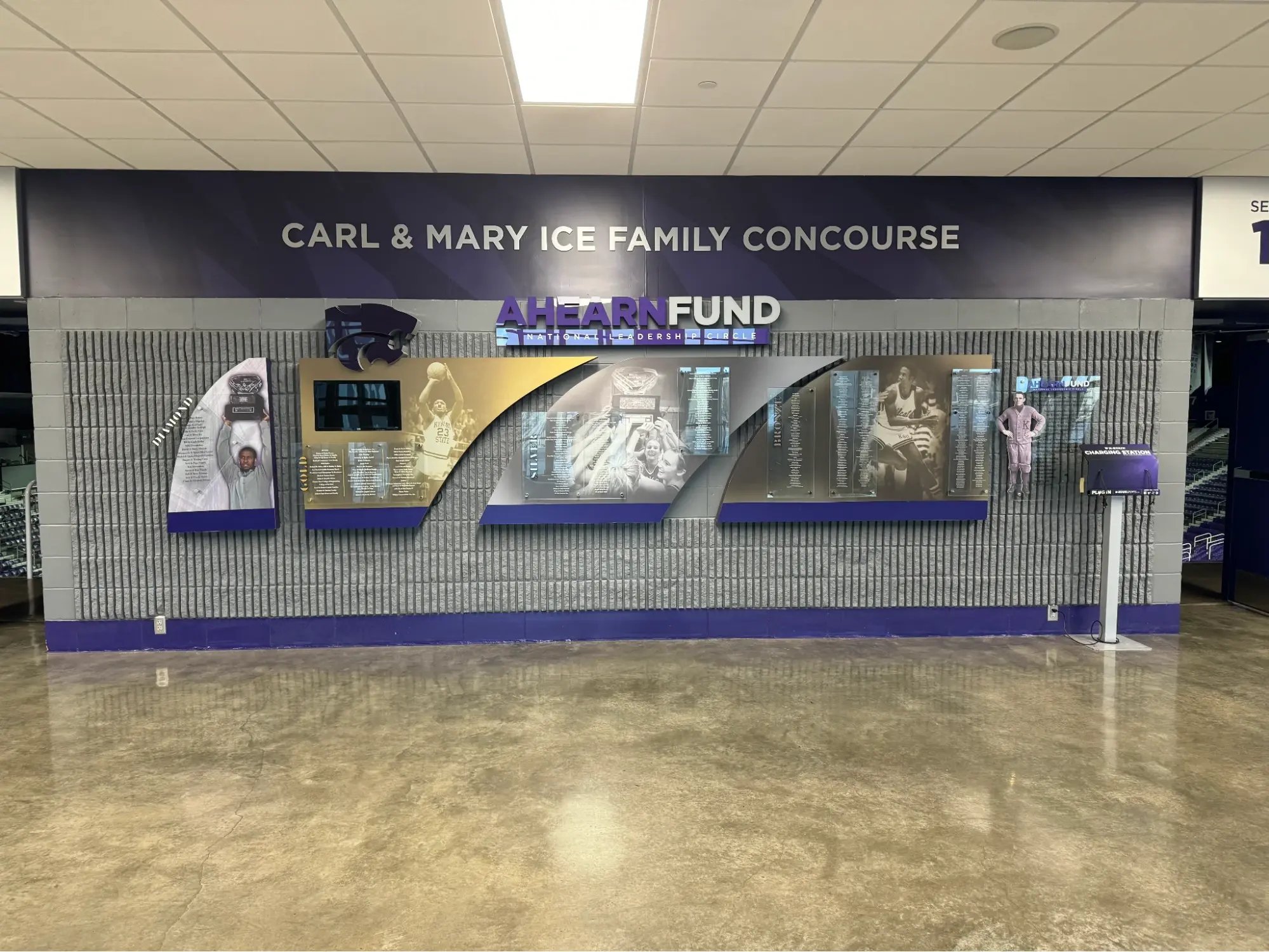 Before
Static plaques grouped by tier, a dark wall, and an embedded monitor that had gone unused for years. Adding a name meant reprinting the board.
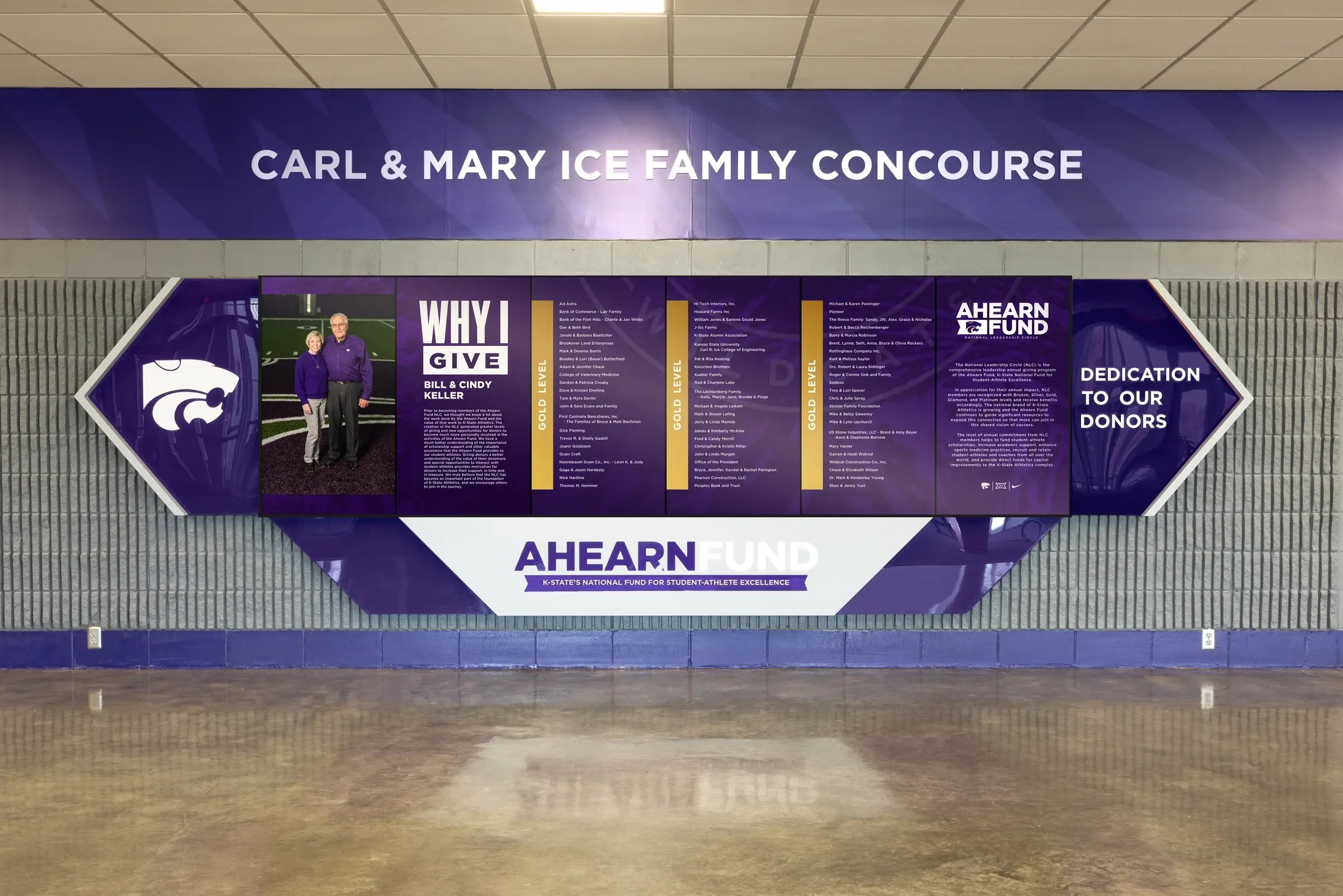 After
After
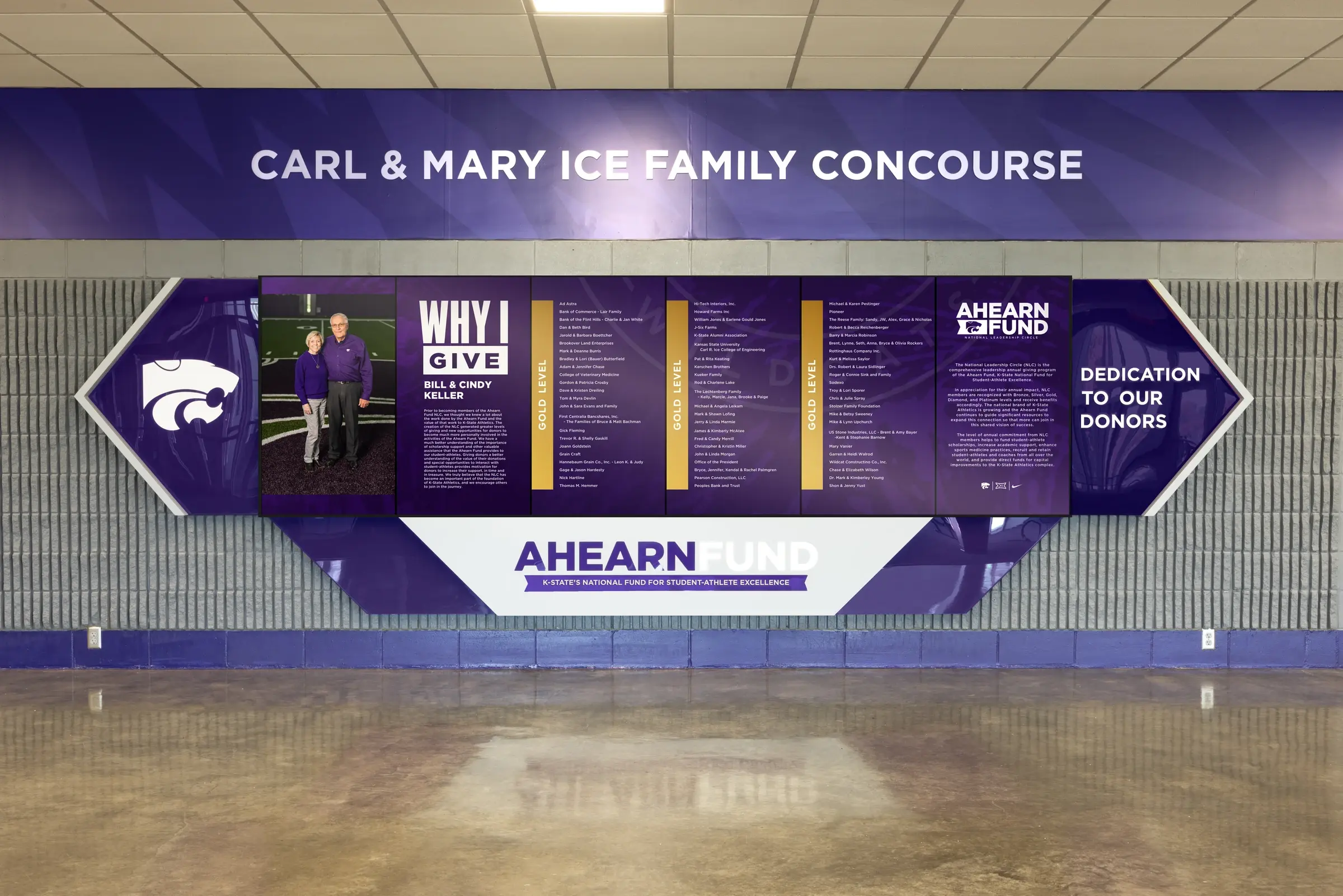
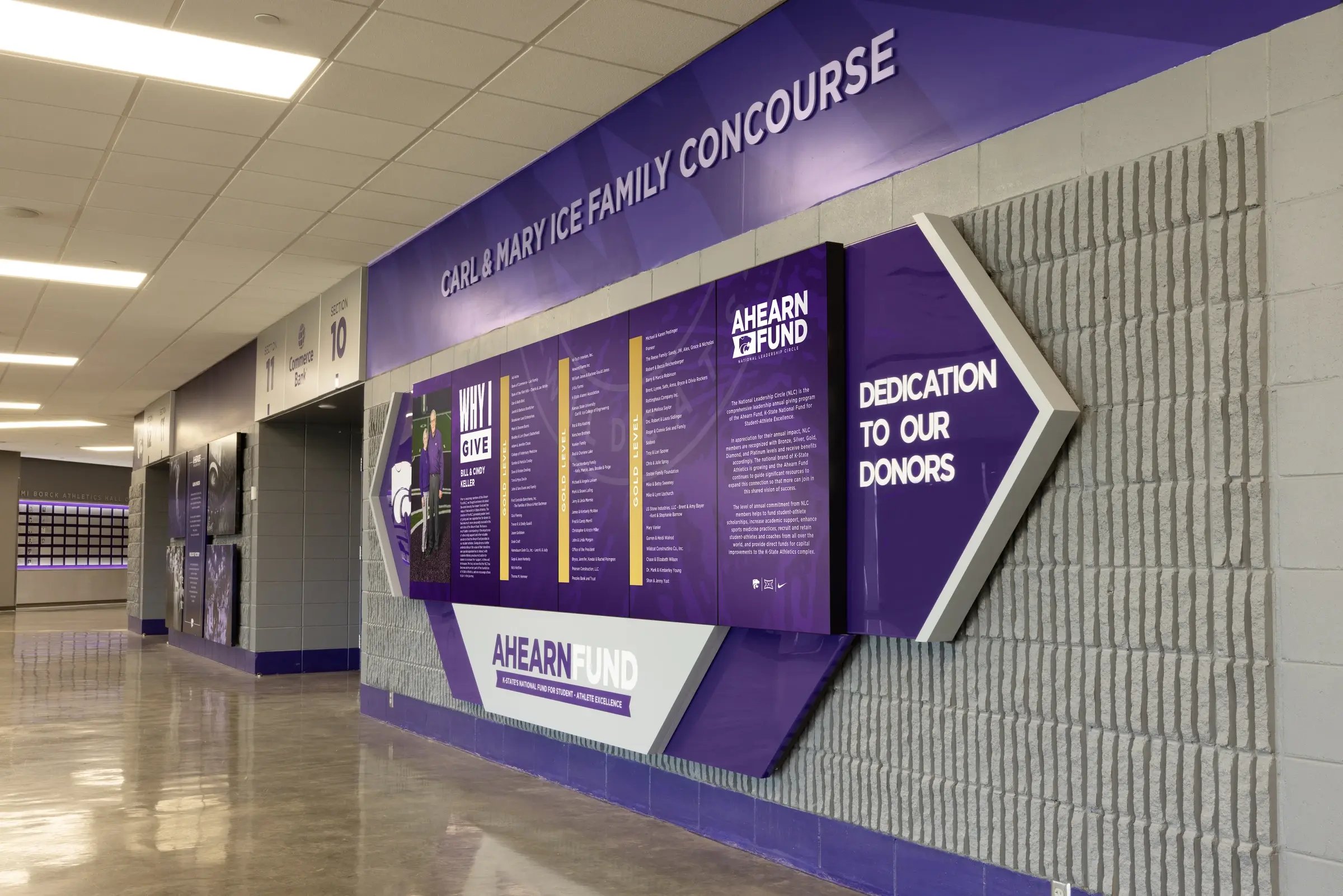
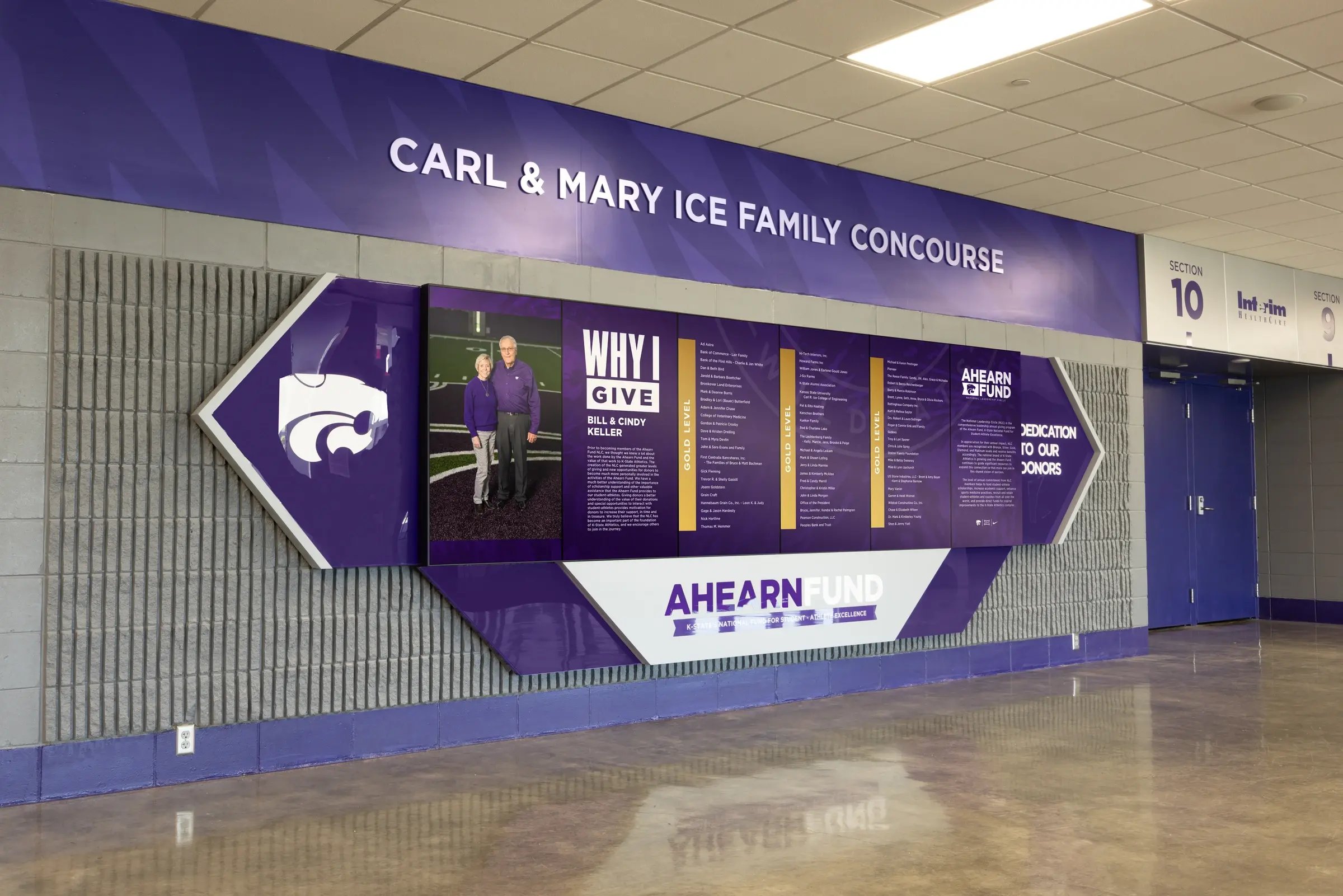
Six portrait panels in a custom enclosure built to the concourse's own geometry. Names, donor stories, and game-day content, all updated from a browser.
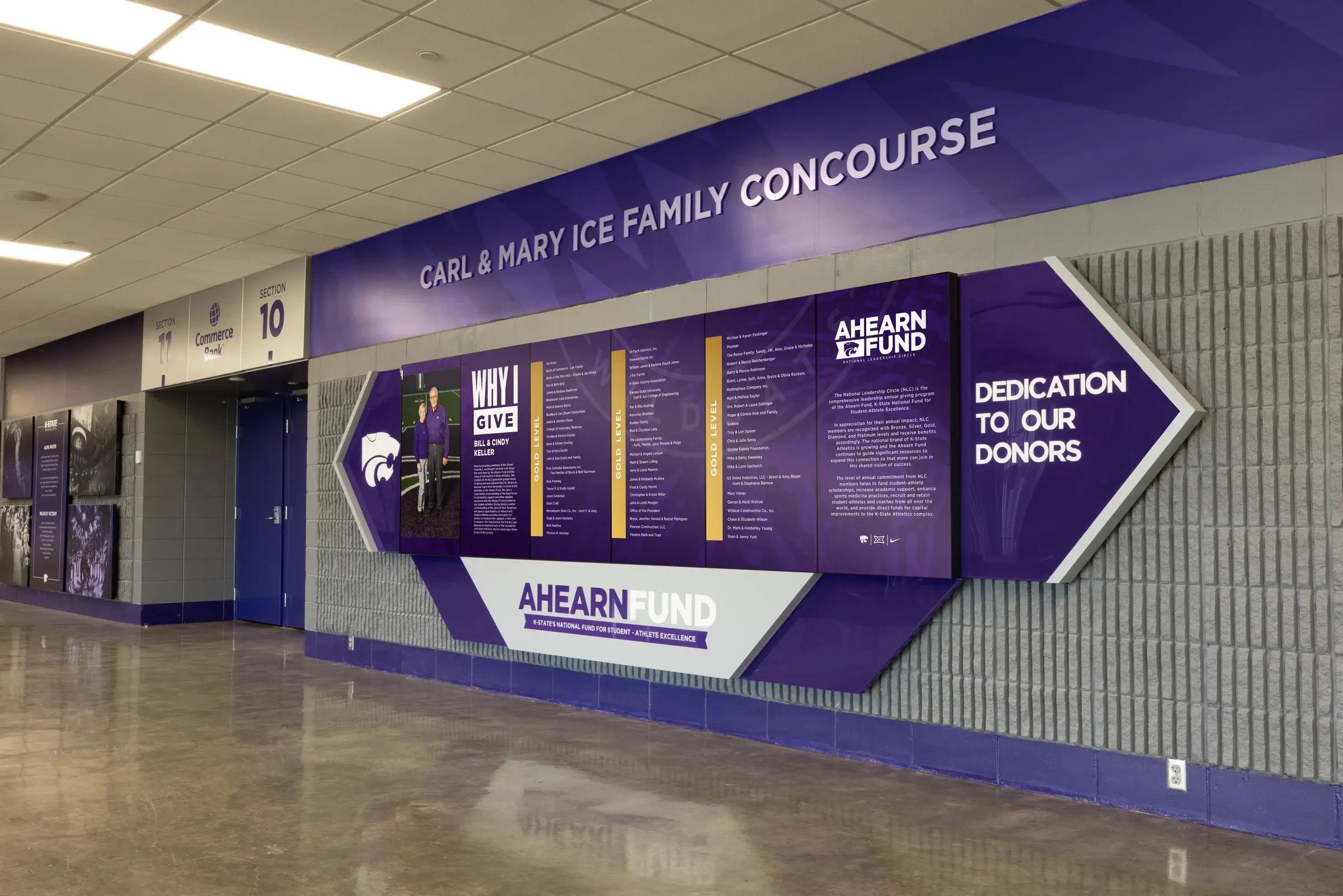
Our Solution
OmniAlly designed a custom enclosure shaped to the concourse itself. The chevron form, the purple field running behind it, and the illuminated Ahearn Fund lockup read as part of the architecture rather than something hung on the wall in front of it.
Six portrait panels divide the wall into working zones. A "Why I Give" spotlight carries a donor photo and their reasons for giving in their own words. Three panels hold the giving tiers. A fourth explains what the National Leadership Circle actually funds — scholarships, academic support, sports medicine, and facilities.
Updates run through a drag-and-drop interface with no templates to work around. Staff import the full donor list from a spreadsheet, or add a single name in place. The gap between a gift arriving and a name appearing on the wall went from most of a year to a few minutes.
Content can be scheduled ahead. A football game day carries its own graphics, set to appear and disappear on chosen dates, then hands the wall back to the standard rotation without anyone touching the system that morning.