Digital Donor Experience Center
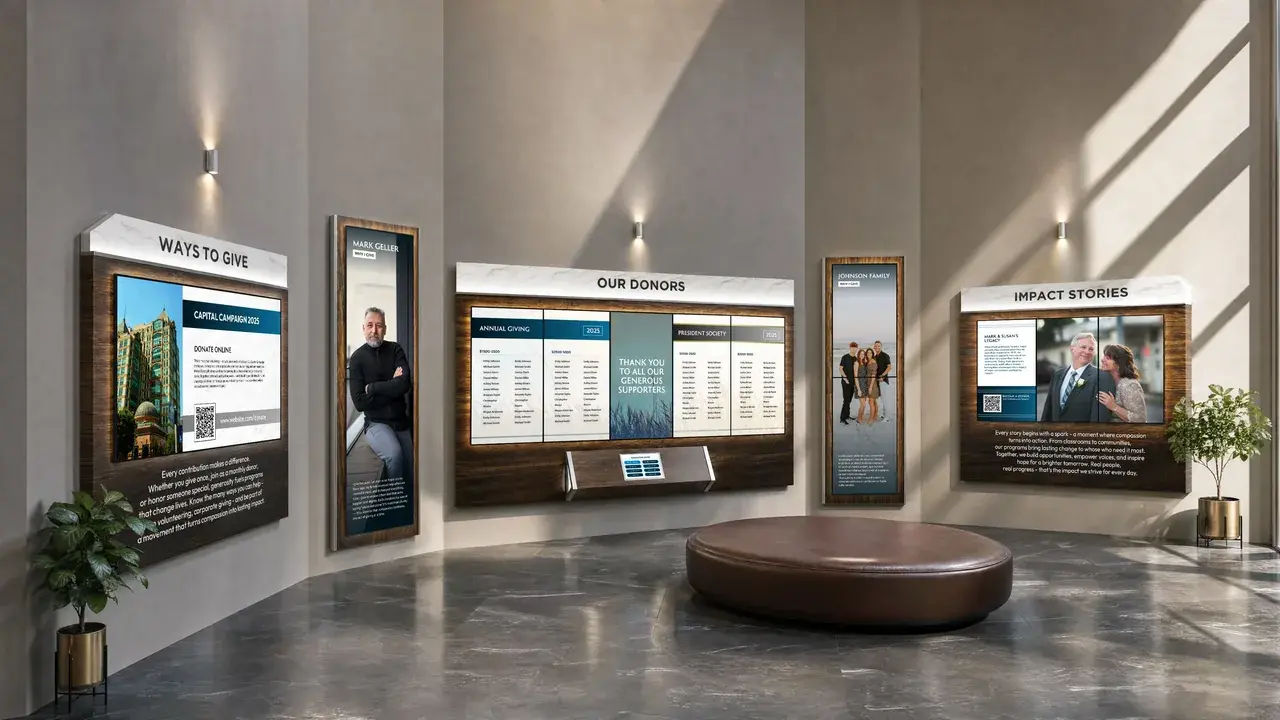
Give giving a destination: a room where donors see what generosity builds here, and choose what they'll help build next.
Learn More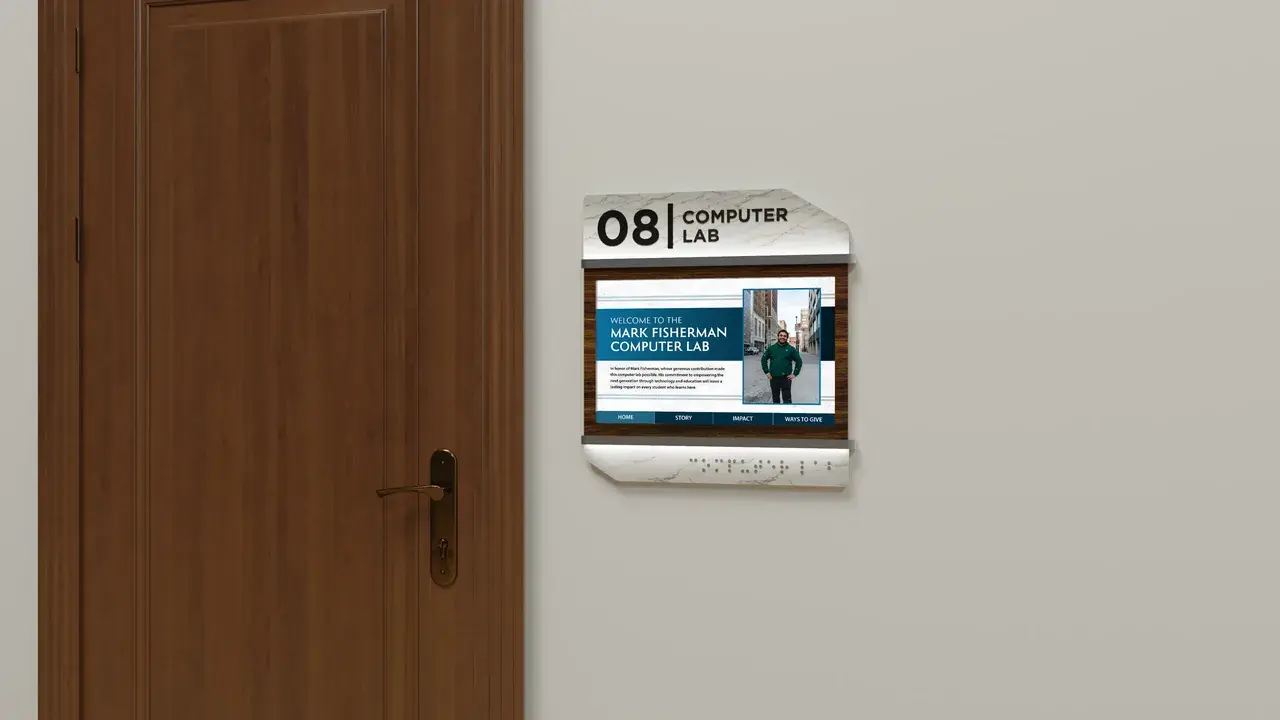
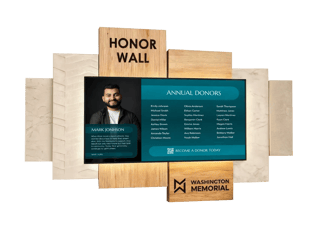
Digital Donor Plaques
Your biggest gifts deserve their own moment. At the room itself: the donor, the story, and the difference it makes there every day.
Learn MoreDigital Donor Recognition FAQs
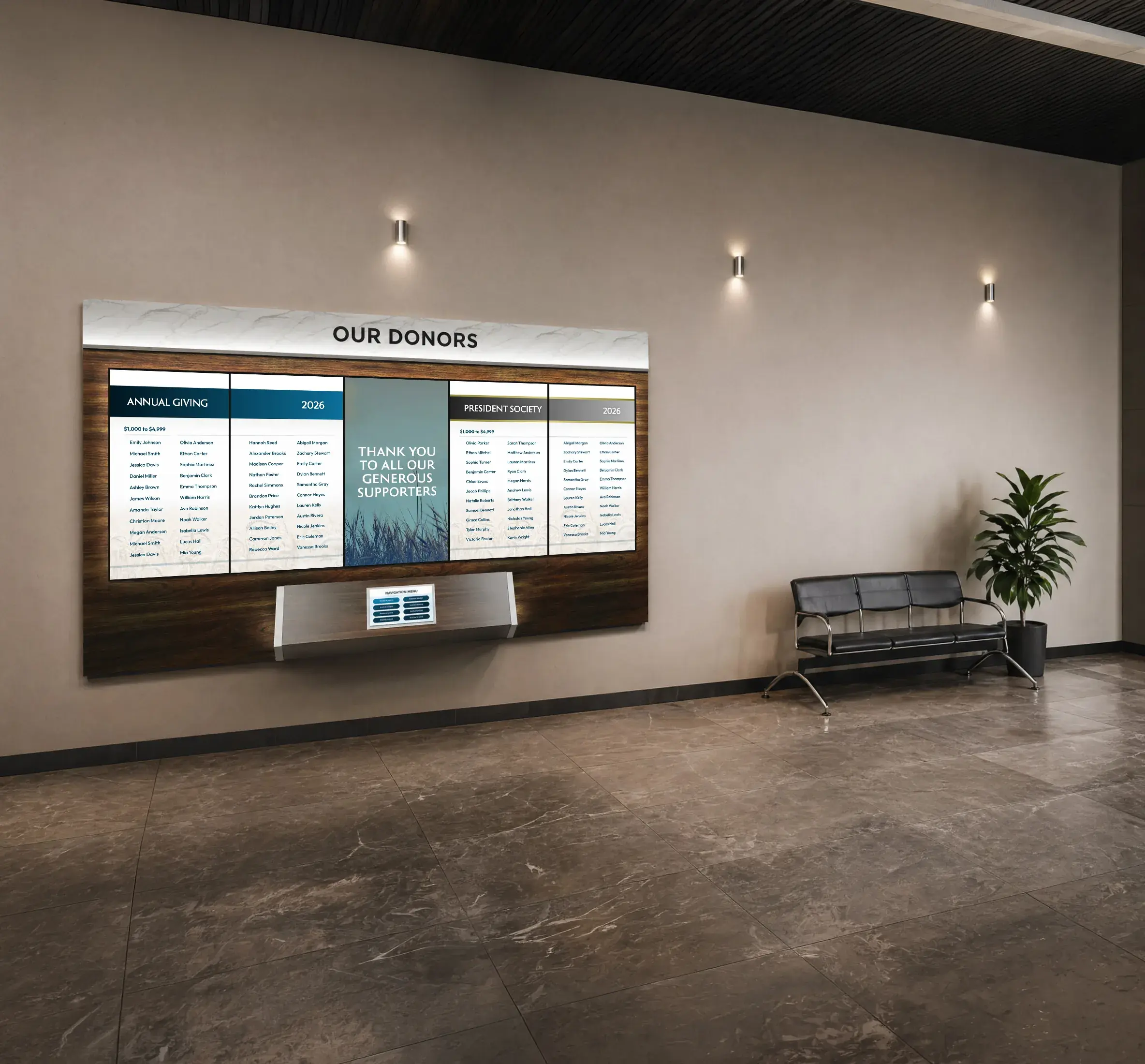
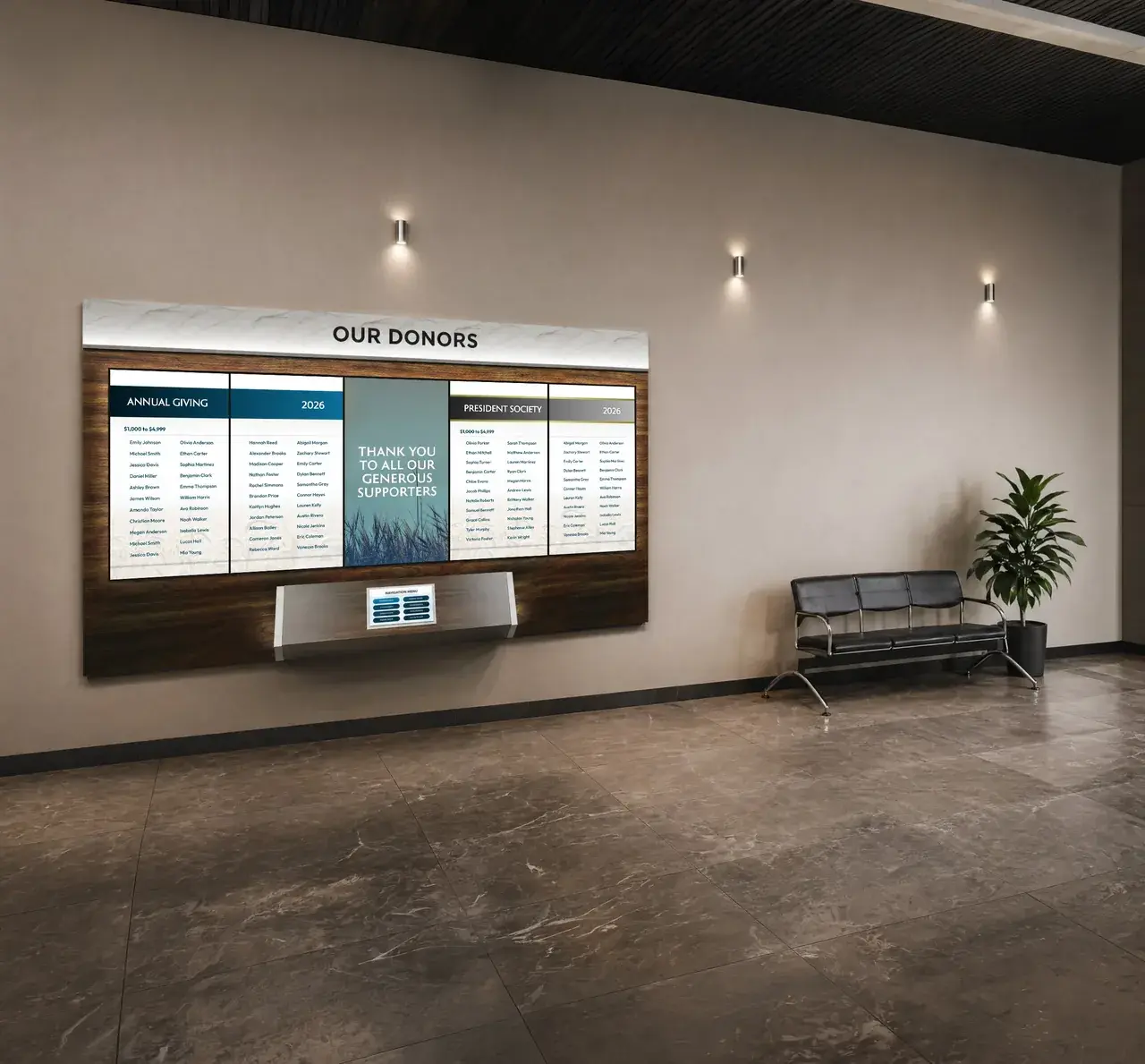
Digital donor recognition uses digital displays to recognize supporters while also sharing the impact of their giving. Unlike traditional engraved or printed recognition, the content changes as donors, campaigns, and stories change. OmniAlly's digital donor recognition takes four forms: digital donor walls, digital donor boards, digital donor plaques, and donor experience centers. The most familiar is the digital donor recognition wall: the donor recognition wall in the main lobby, rebuilt as displays in a custom enclosure.
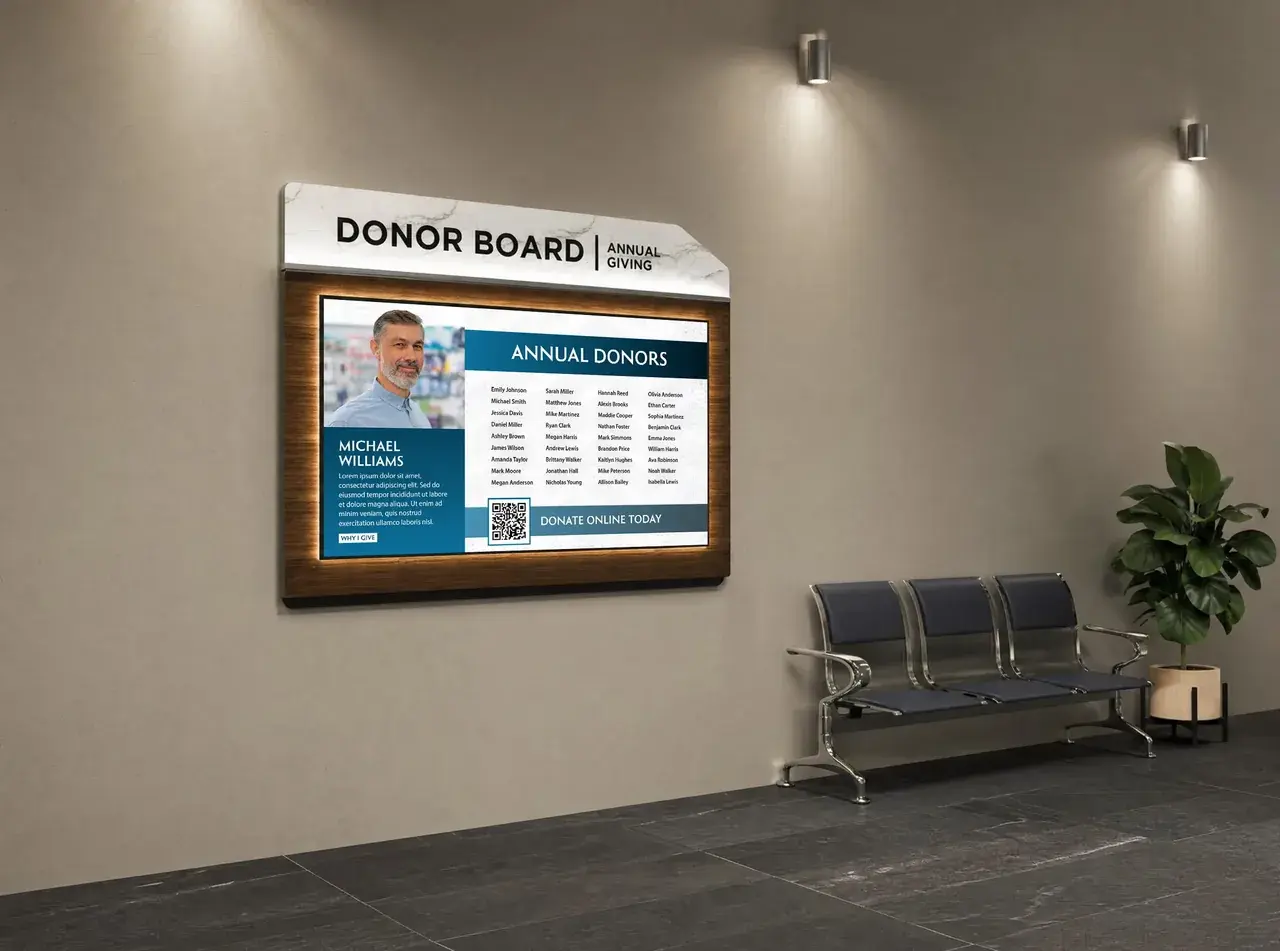
It depends on your space, your donor recognition program, content needs, budget, and the experience you want for donors and visitors. Digital donor boards use a single screen. Digital donor walls use two or more screens and carry more content across larger spaces. Digital donor plaques bring recognition to individual rooms and named spaces, and donor experience centers bring recognition and storytelling together across a whole room. OmniAlly works with each organization to find the right fit or combination rather than forcing every project into one format.
A traditional donor recognition wall uses permanently printed, engraved, or fabricated donor names, so the donor list is fixed until the next fabrication. A digital donor wall updates donor information and content over time and adds impact stories, campaigns, photos, and video, so the wall supports recognition, stewardship, and ongoing fundraising while still serving as a permanent feature of the space.
Beyond donor names and giving levels, OmniAlly digital donor recognition can show impact stories, photos, video, campaign information, a history timeline, leadership messages, giving opportunities, donor highlights, and donor stories such as Why I Give features told by the donors themselves. Content can change by season, campaign, or event, so the wall shows visitors what donor generosity makes possible instead of only listing names.
Where donors and guests already gather or pass: the main lobby or atrium for a digital donor wall, a department, clinic, or common room for a digital donor board, the door of each named room for a digital donor plaque honoring major donors, and a donor lounge or a whole room for a donor experience center. OmniAlly's renderings show the recognition to scale in your own space before anything is built.
Your team updates the donor list, giving levels, stories, photos, and video from a cloud dashboard in any browser, or the displays update on their own from Raiser's Edge NXT, Salesforce, DonorPerfect, Blackbaud CRM, and other donor management systems. Donor preferences, including anonymity, stay in your donor database and carry through to every display. If you would rather not manage updates, OmniAlly's team can handle them.
OmniAlly publishes starting prices for every indoor product on its pricing page, with installation included and a software license after, and adding names costs nothing. The final investment depends on the product, the number and size of the displays, the enclosure and finishes, and the content.
Yes. OmniAlly designs digital donor recognition around your brand, architecture, available space, and recognition goals. Depending on the solution, customization covers display size and orientation, materials, architectural elements, graphics, branding, content layouts, and interactive features, so the finished installation feels like an intentional part of the space.
Yes, in three forms: an interactive donor wall whose displays take touch, or a freestanding kiosk with the same content; a smart wall with a smaller touchscreen podium in front that controls the large displays behind it, or a non-interactive wall that plays on its own with a QR code for anyone who wants more. Which one fits depends on your goals, your space, and the moments the recognition has to build.
Yes. An existing engraved or printed wall can stay where it stands for the campaigns it honors, and the digital recognition carries the campaigns since. The names on the existing wall can also be carried onto the digital displays as content, so the founding donors and this year's donors share one place.
The content plays on its own, so nobody has to touch a display to see the names, and type size and contrast are set for reading at a distance. Interactive elements, when you want them, sit at a height a seated visitor can use.
Yes. The displays keep playing from local storage when the building's internet drops, and the next update arrives when the connection returns.
The timeline depends on the size, design, fabrication, and installation of the project. Once the design is approved, OmniAlly coordinates fabrication and installation so the recognition is ready for its planned unveiling, and it can be planned alongside new construction or a renovation so it is built into the space rather than added later.
Yes. Digital donor recognition connects donor names with the impact of giving, so it serves both. Organizations recognize donors while sharing impact stories, highlighting the capital campaign, communicating giving opportunities, and helping prospective donors understand how philanthropy supports the mission, which supports donor retention as well as the next campaign.
Hospitals and health care foundations, colleges and universities, schools, arts and culture organizations, senior living communities, faith-based organizations, and other nonprofits. OmniAlly's digital donor recognition is used by organizations such as Baptist Health, K-State Athletics, Colorado Northwestern Community College, the Marcus Jewish Community Center of Atlanta, Fresh Start Women's Foundation, Crossover Mission, and the St. Agatha-St. James Newman Center.