From First Gift to Lifetime Giving
Welcome every first-time donor the moment the gift is recorded: their name goes up on the same screen as your largest, and their first visit back finds it waiting. Steward across years rather than campaigns. Each donor stays visible at the level they gave, their giving story kept whole, the gift anniversary marked in public. Grow with them: as someone's giving grows, their name moves up with it, and on the morning that new level goes up, donors renew their place in something that never forgot them.
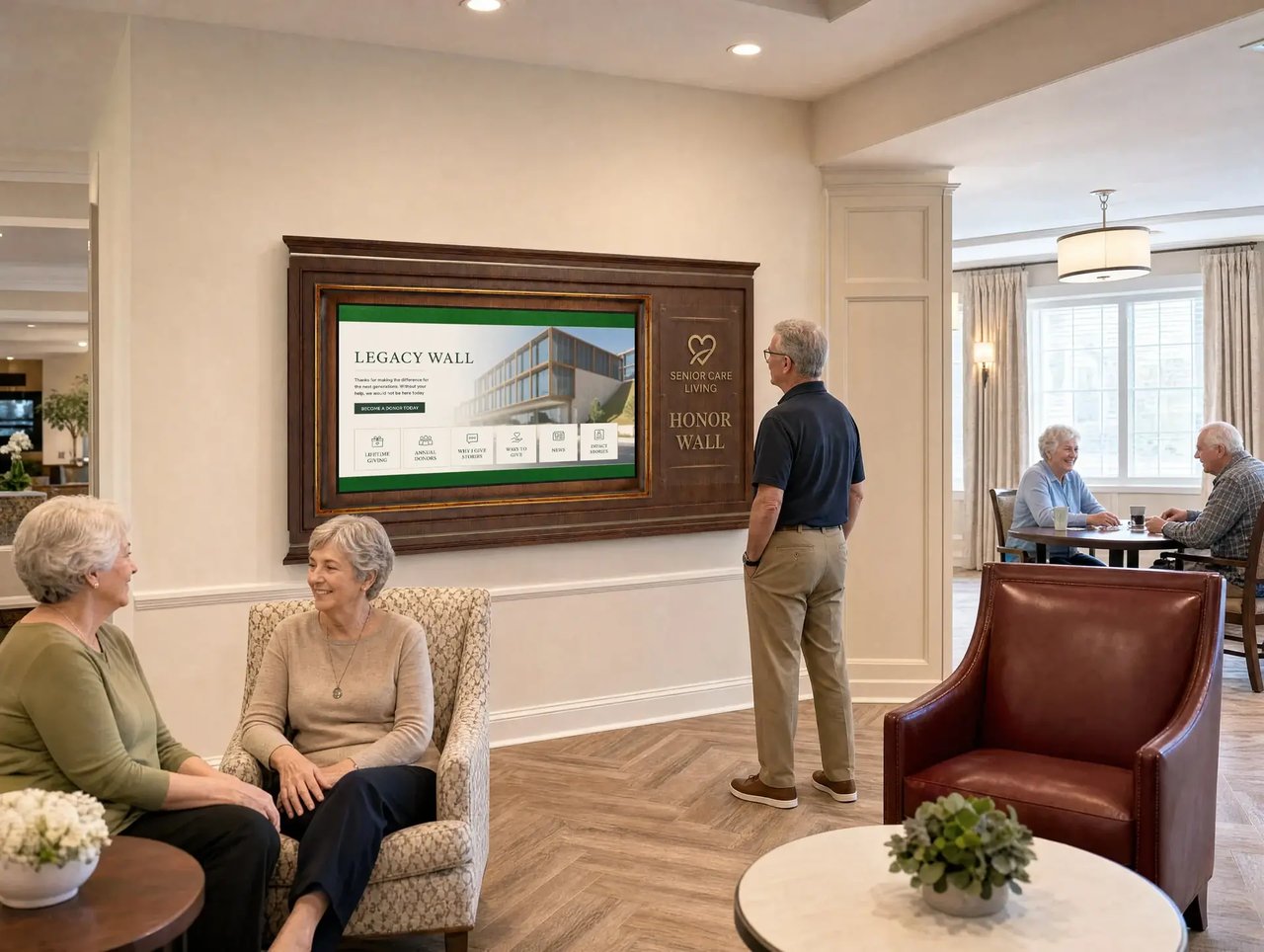
Going Digital: Benefits Over Traditional Plaques and Printed Boards
| When this happens | Digital board | Printed board or plaques |
|---|---|---|
| Adding a new donor | The name is entered in the dashboard or arrives from your donor database and is on the board that day. | A plate is ordered, engraved, and mounted. First-time donors wait for the next batch. |
| Giving levels | The name moves to its new level on the board. | A donor who moves up needs a new plate in a new row. |
| Campaigns | Every campaign keeps its place on one screen, and the next campaign opens on the same board. | Each campaign needs its own board or its own panel. |
| Stories and imagery | Donor stories, photographs, video, impact, and campaign progress between the names. | Names only. |
| Running out of room | The board never fills. Every giving level fits on one screen. | The board fills, and a replacement is designed and built. |
| Several locations | A board at the branch, the school, and the clinic, all on one list and one dashboard. | A separate board, and a separate list, at every site. |
| Cost over time | A published starting price with installation included, then a software license. Adding names costs nothing. See pricing. | Every change is a fabrication order. |
Designed to Grow Your Giving
The board is an ongoing fundraising instrument, designed to grow your giving, keep the donors already with you, and make generosity part of how your organization speaks. It works between your asks: donors, visitors, and board members absorb your case for support every time they pass, so the ground is already warm when your next appeal lands. Recognition like this is normally budgeted inside the campaign it celebrates, and it keeps working long after that campaign ends: the kickoff, the dedication, and every ordinary morning in between.
A Culture of Philanthropy in Every Building
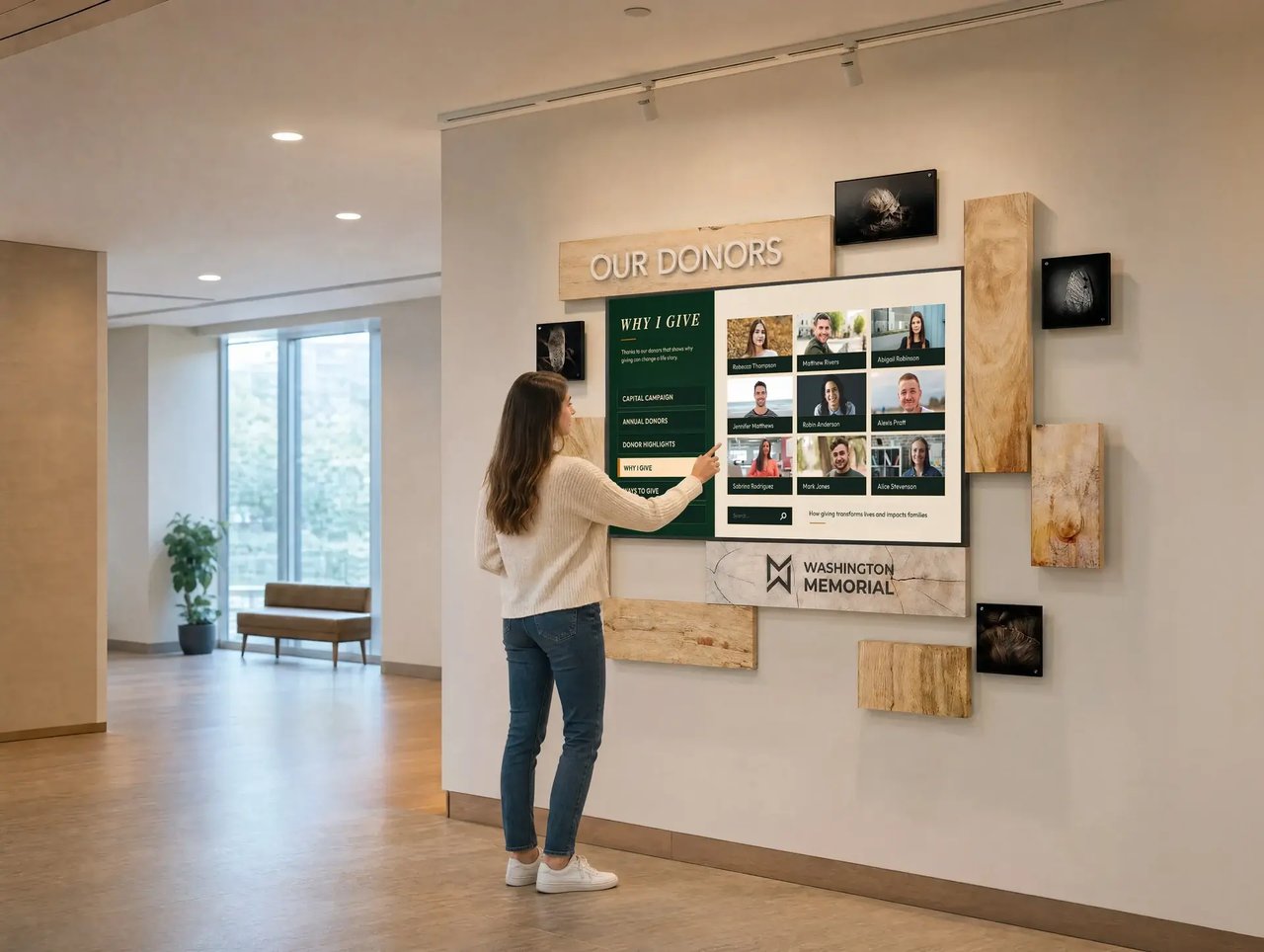
Every part of your organization has donors of its own, and a giving culture that lives in one lobby stops at that lobby's door. A board at the branch, the school, or the clinic puts recognition where each of those communities gathers, a new site opening complete with its own donors already up. On reunion weekend at the school, or when a family brings guests in to find their name at the clinic, the whole organization says the same thing: generosity is who you are.
Board Design, Placement, Size, and Timeline
Design
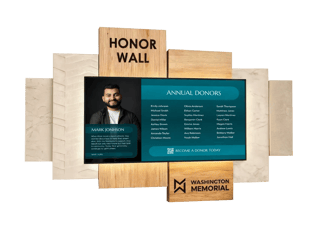
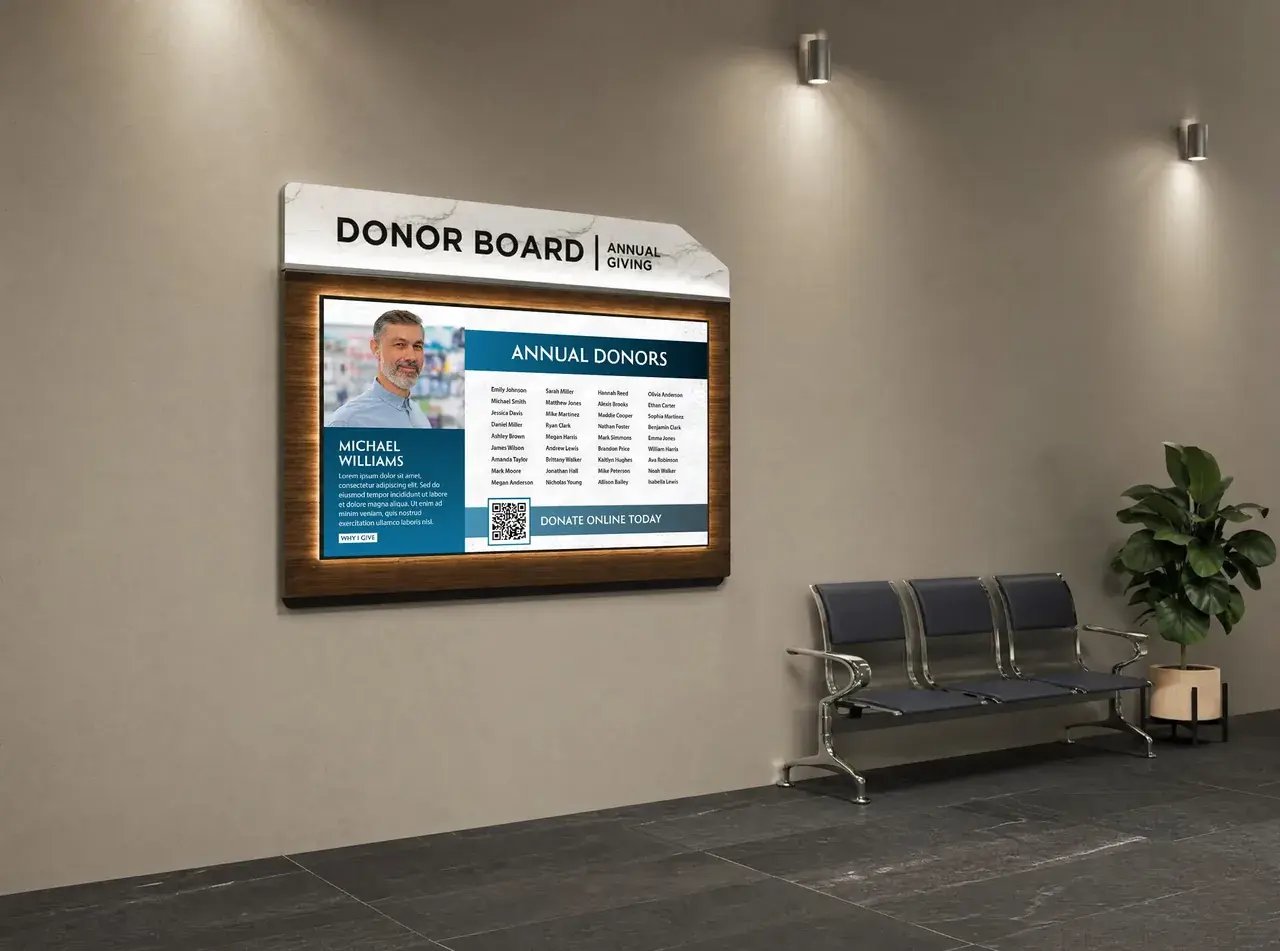
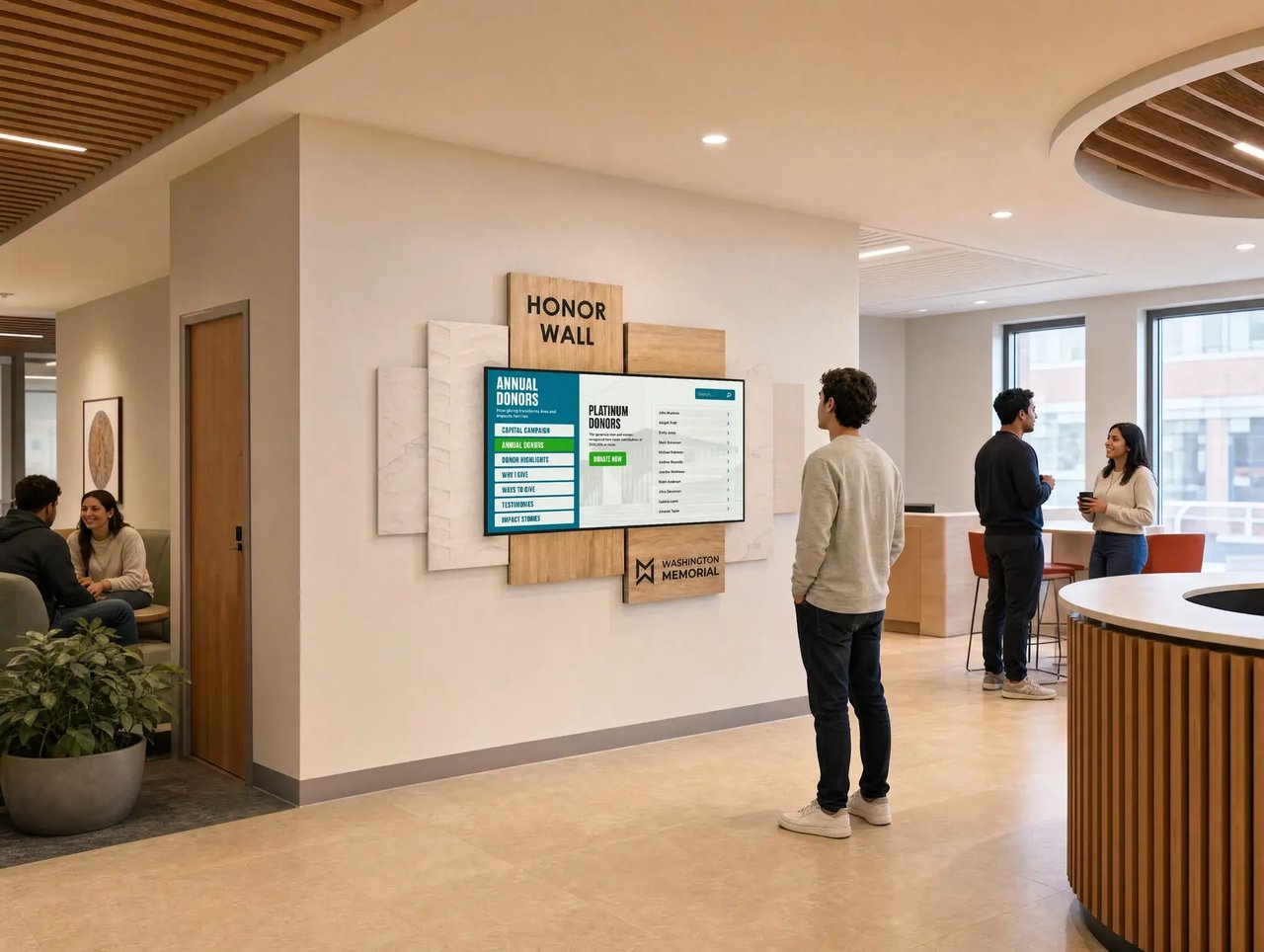
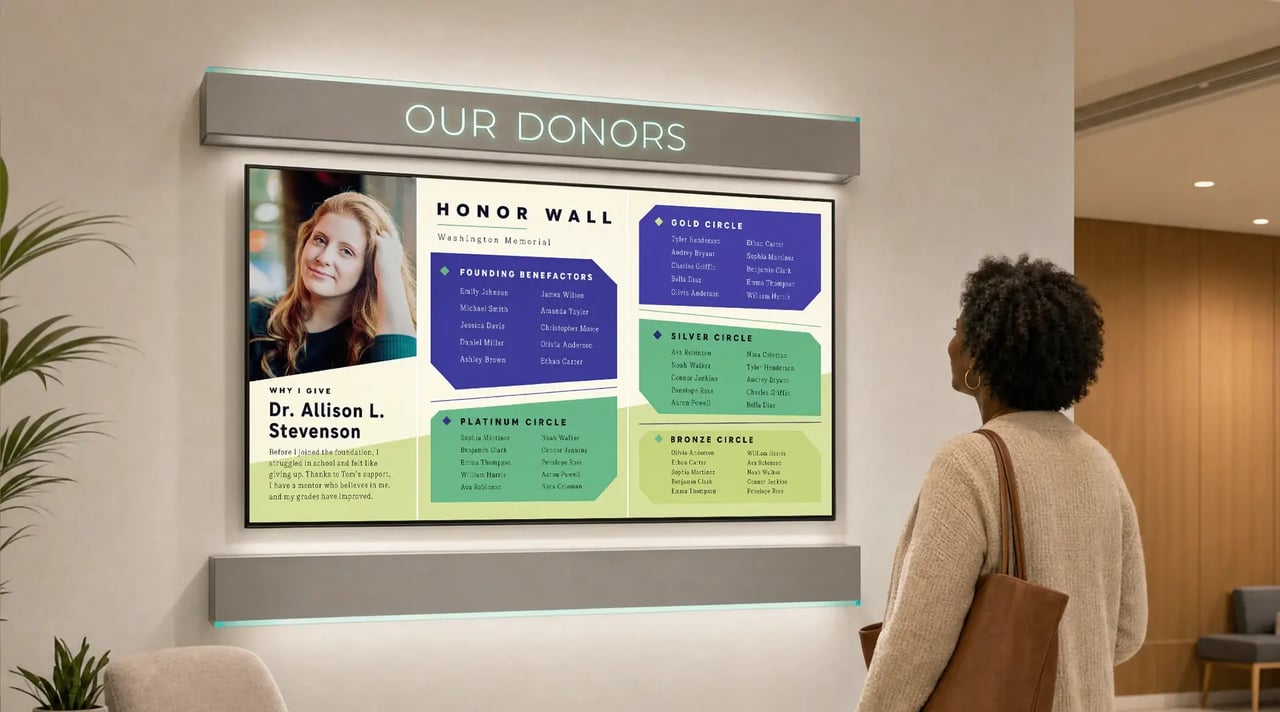
OmniAlly begins with renderings of the board in your actual room, then draws the frame, the finishes, and the on-screen graphics for your brand and your architecture. Type is sized for the distance people read from, the recognition language is yours, and you see every giving level laid out on screen before anything is built.
Placement
Where should a donor board go? Where the most people already pause: the main lobby, the foundation office, the corridor outside the auditorium, the waiting area at the clinic, the entrance of each branch or school. One board per site puts recognition where each community gathers, and every board shares one list.
Size & Touch
One screen, sized to the wall it sits on, carries every giving level. Touchscreen interaction is optional and is added when visitors have time to explore giving societies and stories for themselves, and interactive donor walls run on the same software. When a room calls for more, the board's names carry over to a wall display of one or more screens in a later campaign.
Timeline and upkeep
How long it takes depends on the design, the frame, and the room. Once the design is approved, OmniAlly manages production and installation against the date you need, usually the campaign kickoff or the opening of the site. After that, all content is easy to update from the cloud dashboard, and the White Glove Experience can handle updates for you.
The rest of the system
The digital donor wall carries the same recognition across two or more screens in a custom enclosure, digital donor plaques carry it to each named room, and the donor experience center builds a whole room around it. See all of OmniAlly's donor recognition products, and for donor board ideas and other recognition designs, read the donor wall ideas guide.
Digital Donor Board FAQs
It is a single-screen donor recognition display that shows the names of donors alongside impact stories, campaigns, photos, videos, and giving opportunities. OmniAlly builds them for lobbies and other spaces where one display can carry the whole donor base at every giving level. Unlike a static list or a printed recognition board, the content changes as your donors, campaigns, and stories change.
A printed or engraved recognition board lists the donors who had given by the day it was made, and every new name is a plate order. A digital board holds every giving level on one screen as content, so a new name goes up the day the gift is recorded, a donor who moves up changes level on the board, and stories, photographs, and campaign progress play between the names.
The board uses one screen, while the wall uses two or more screens and can carry more content across a larger space. Both run on the same OmniAlly software, show the same kinds of content, and update the same way. OmniAlly helps you decide which fits your room, your recognition goals, and your budget.
OmniAlly's digital donor boards start at $25,000, with installation included. A single-screen board is the entry point to the recognition system. A software license follows, and adding names costs nothing. The final investment depends on the size of the screen, the frame and finishes, and the content.
All of them. The board holds every giving level and rotates through the names by society and campaign, so a first-time donor and a lifetime donor share the same screen without anyone waiting for room. The on-screen design sets how many names show at once and how often the list turns.
The board can show giving levels, impact stories, campaign information, photos, videos, giving opportunities, and Why I Give stories told by donors themselves. Regularly featuring new names and stories gives visitors a reason to notice the board again and connects donor recognition to the impact of giving.
No. The board can rotate through names, giving levels, impact stories, and campaigns on its own, so it keeps sharing recognition and impact with people who simply walk by. Touch can be added when an interactive display makes sense for your space and audience.
Where the most people already pause: the main lobby, the foundation office, the corridor outside the auditorium, the waiting area at the clinic, or the entrance of each branch or school. OmniAlly's renderings show the board in the actual room before the decision is made, and one board per site keeps recognition where each community gathers.
Yes. The board and the wall share the same software and the same names, so a single-screen board can be the first step, and a multi-screen wall or an experience center can follow in a later campaign. The donor base, giving levels, and campaigns you built carry over.
Yes. The on-screen design is drawn for your brand, so a ranked list, a donor tree, a leaf design, or a gallery of donor photographs are all layouts the board can carry, and the layout can change for a new campaign without changing the board.
Your team adds names and content from OmniAlly's cloud dashboard, and you never keep a separate list for the display. Names update automatically from Salesforce, Raiser's Edge NXT, DonorPerfect, Blackbaud CRM, Ellucian, Tessitura, Bloomerang, Blackbaud Luminate, Virtuous, Neon CRM, Bonterra, and other donor management systems. OmniAlly's White Glove Experience can also handle updates for you.
Yes. An existing printed or engraved board can stay where it hangs, and the digital board carries the new campaigns and stories. The names from the printed board can also be carried onto the digital board as content, so the founding campaign and this year's donors share one screen.
It uses digital signage hardware, a screen and a media player, but it runs on donor wall software built for a recognition program: donor tiers, campaigns, scheduled stories, offline playback, and a connection to your donor management system. That is what makes it a recognition board rather than a lobby screen playing announcements.
It depends on the design, the frame, and the room. Once the design is approved, OmniAlly coordinates production and installation so the board is ready for its planned unveiling, often the campaign kickoff or the opening of a new site.
No threshold is required. Every giving level fits on one screen, so a first gift and a lifetime gift share the board, and that is the way to recognize donors that keeps first-time givers coming back. If you want a minimum, set a threshold in the software and the board applies it, and change it later without changing the board.
Hospitals and health care foundations, colleges and universities, senior living communities, faith-based organizations, arts organizations, and other charities use them, usually in a lobby, foundation office, or other high-traffic space. OmniAlly designs each board around the organization's brand and the room it sits in, and its donor recognition is used by organizations such as Baptist Health, Colorado Northwestern Community College, Crossover Mission, and the St. Agatha-St. James Newman Center.