Marcus Jewish Community Center of Atlanta
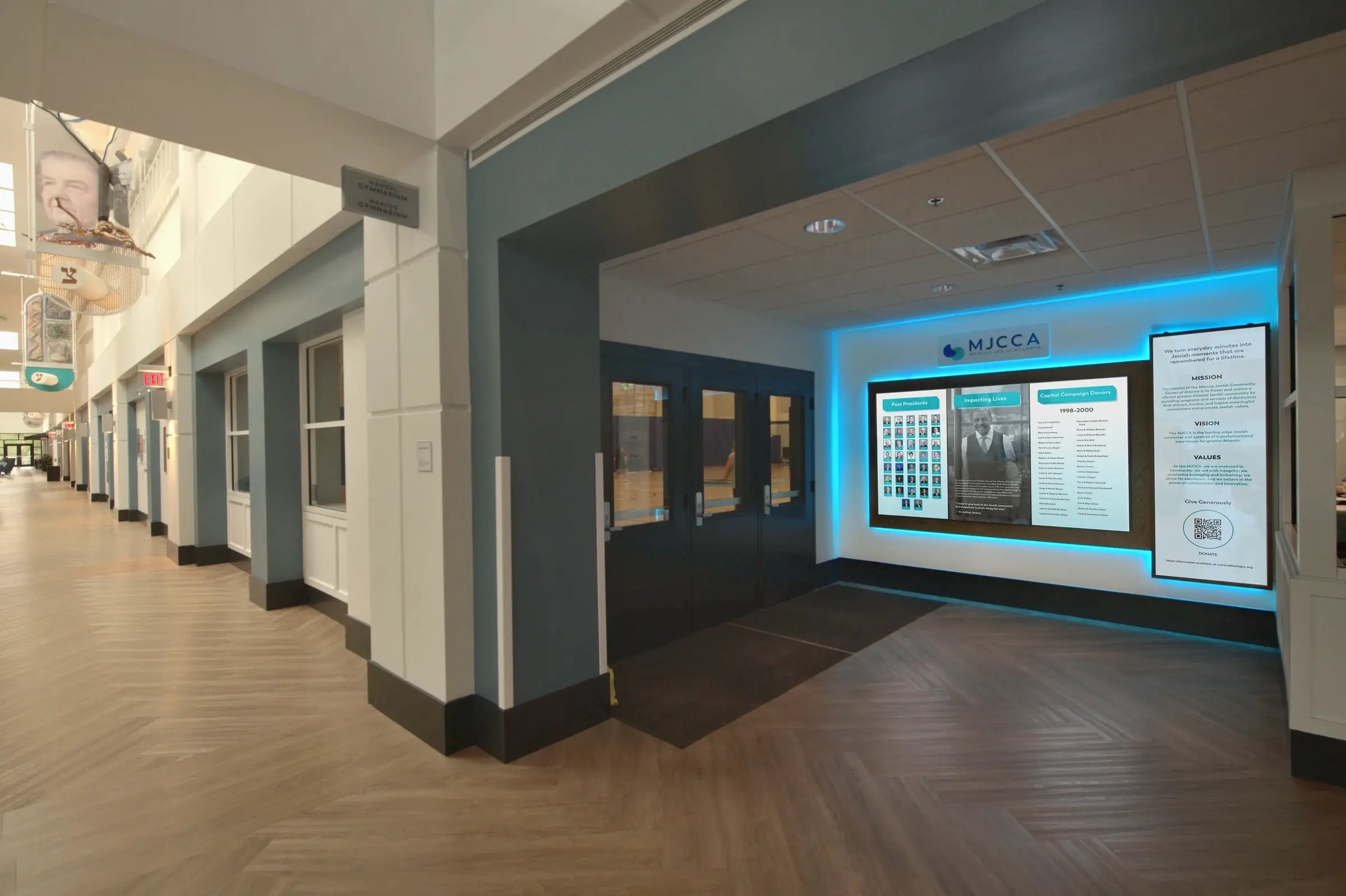
MJCCA, a Community Services institution from Atlanta, GA, chose OmniAlly to build their digital donor wall to replace an existing engraved wood display that no longer fit their image or needs.
About Project
The Marcus Jewish Community Center of Atlanta is a century old and on its third building. OmniAlly partnered with them to replace engraved recognition with a digital donor display — one that could hold a hundred years of giving and still be corrected the following week.
MJCCA had just completed a major capital campaign and was rebuilding much of the facility, down to replacing every sign in the building. Recognition for past campaigns had been engraved in wood, mounted to a structure coming out with the renovation. Whatever replaced it had to belong to the new building rather than sit against it. The harder problem was older than the renovation.
Record keeping from thirty and forty years ago was uneven, and with two building moves behind them, gifts had gone missing in the transitions. Donors noticed. Someone would come through and ask where the water fountain they funded had gone, or where their grandfather's name was — and on an engraved wall, there was no good answer.
Recognition Challenges
For an organization this old, the problem was never fitting the names on a wall. It was that the list was never finished.
Key challenges included:
-
Engraved wood recognition mounted to a structure being removed in the renovation
-
A century of giving across three buildings, with incomplete records from decades past
-
Donors regularly surfacing gifts the organization had no record of, and no practical way to add them
-
Engraving errors that are slow and expensive to correct, and permanent until they are
-
A preschool on site and children moving through the building all day, ruling out a touchscreen
-
A building-wide signage program the donor wall had to sit inside rather than beside
Our Solution
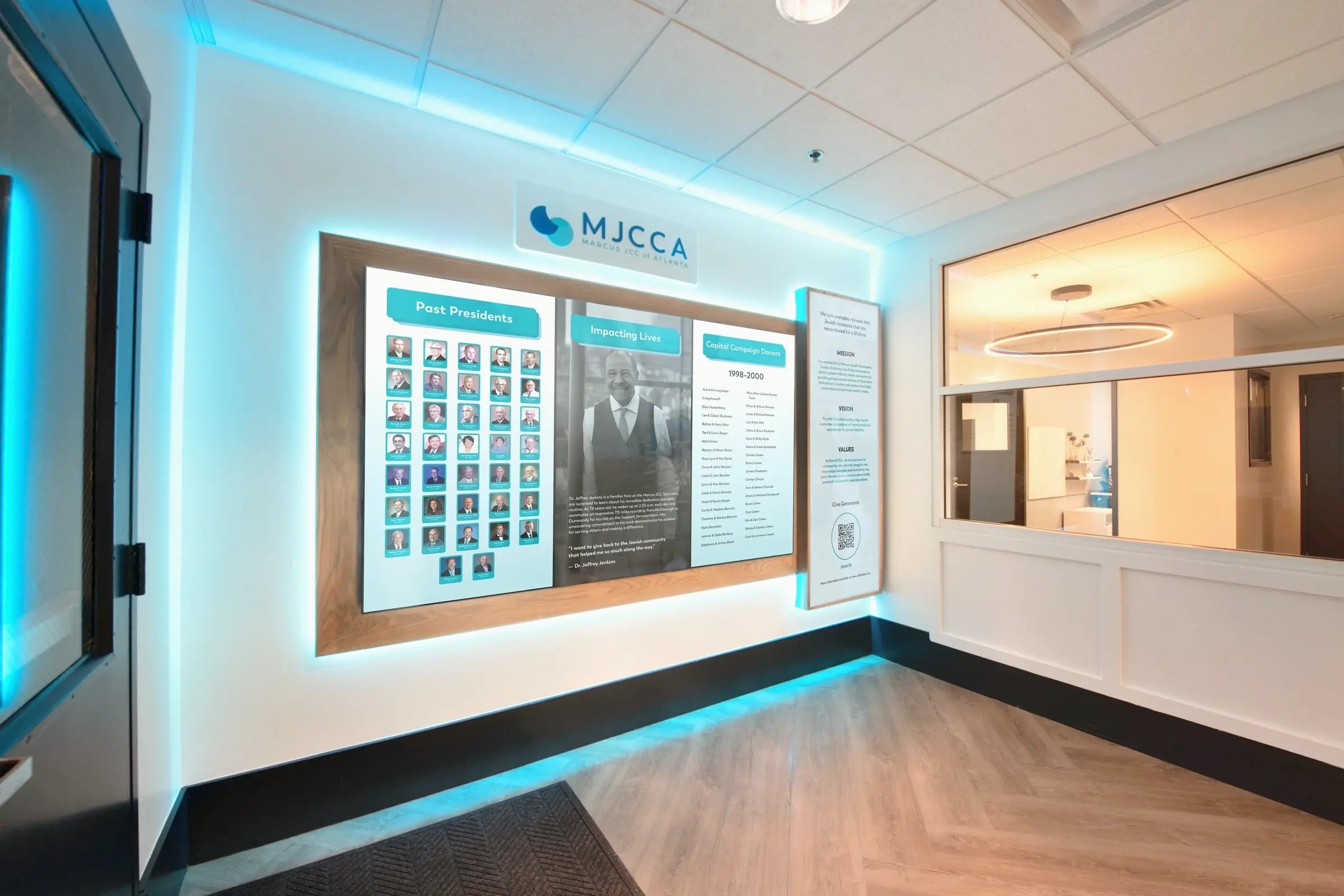
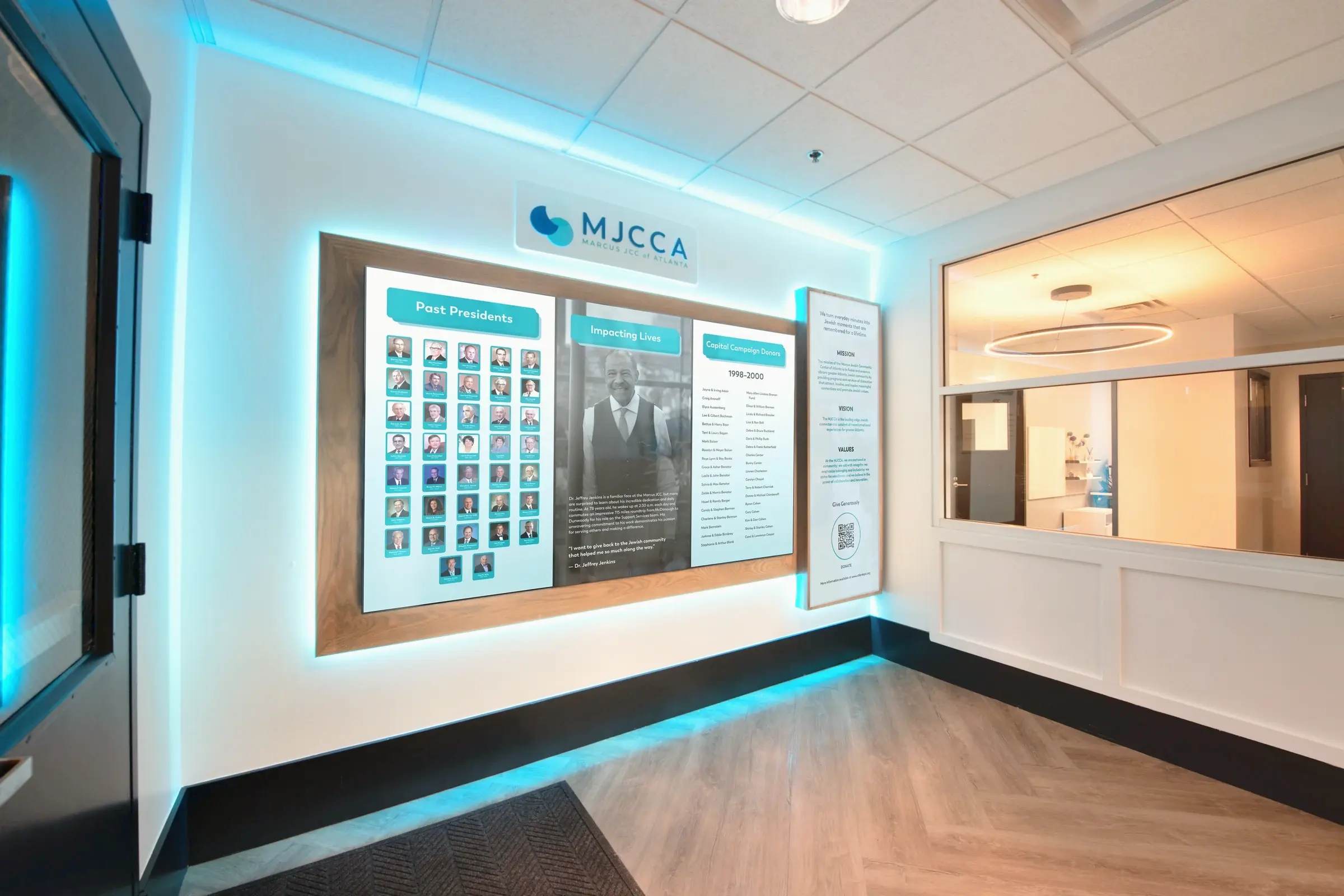
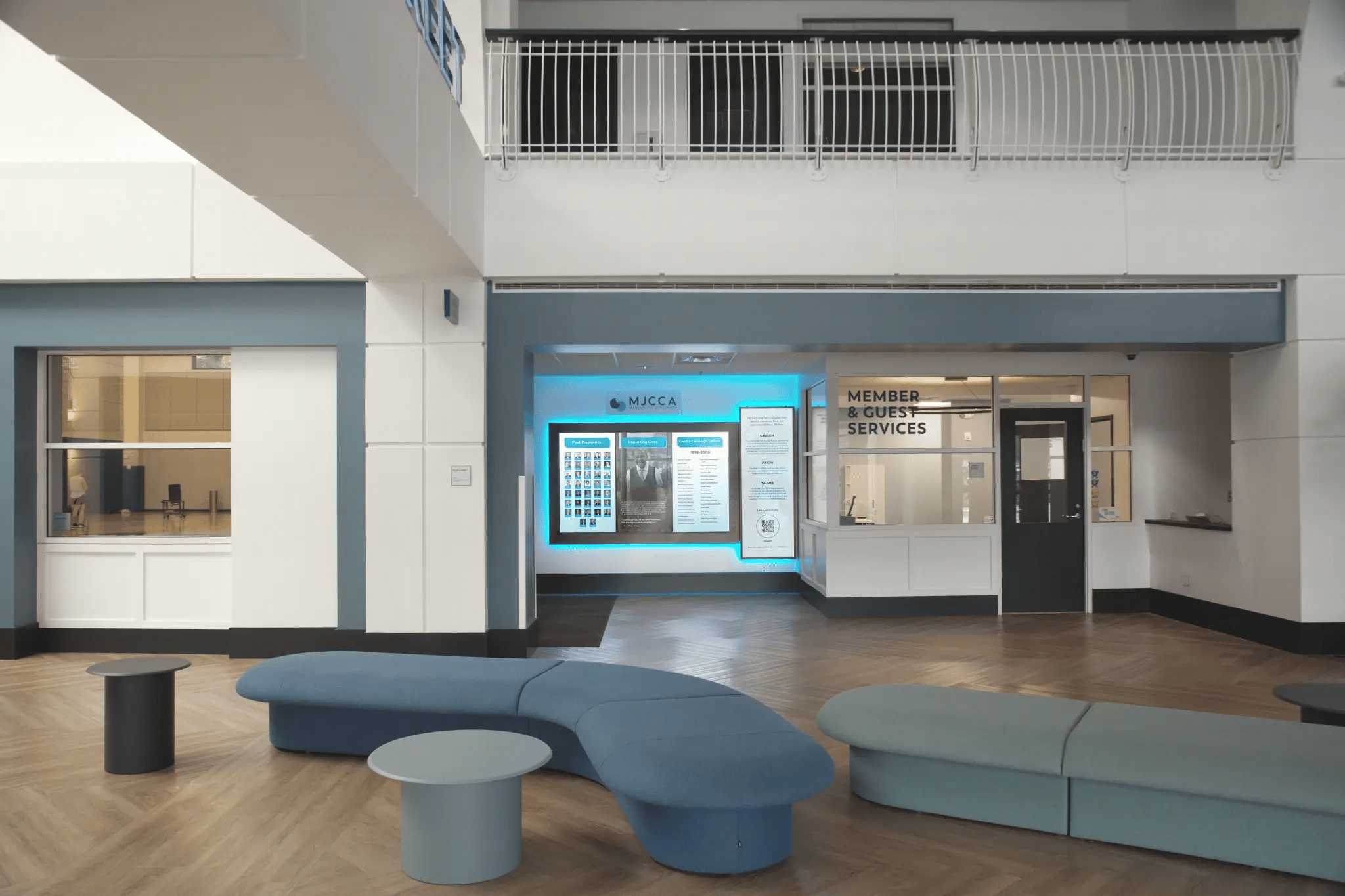
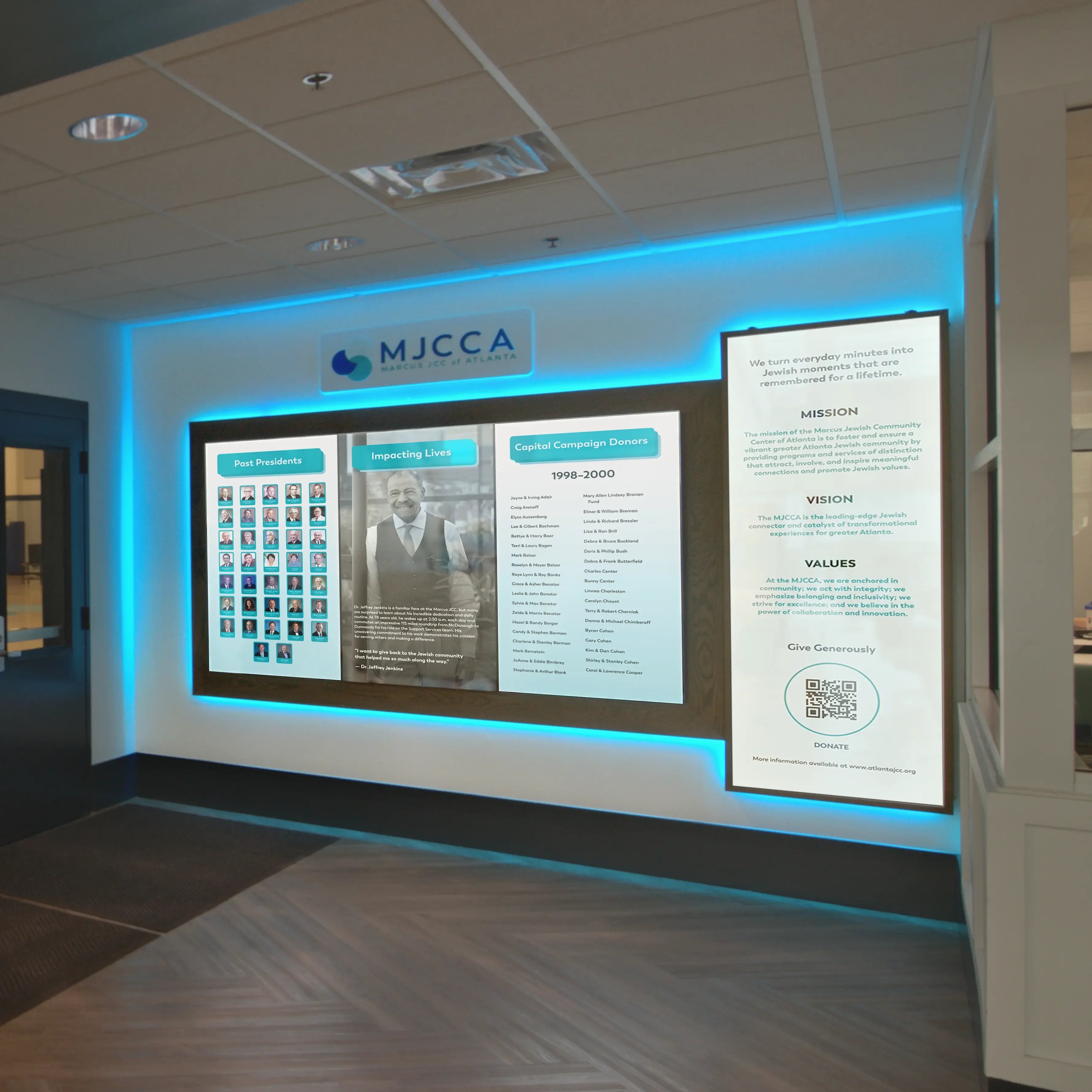
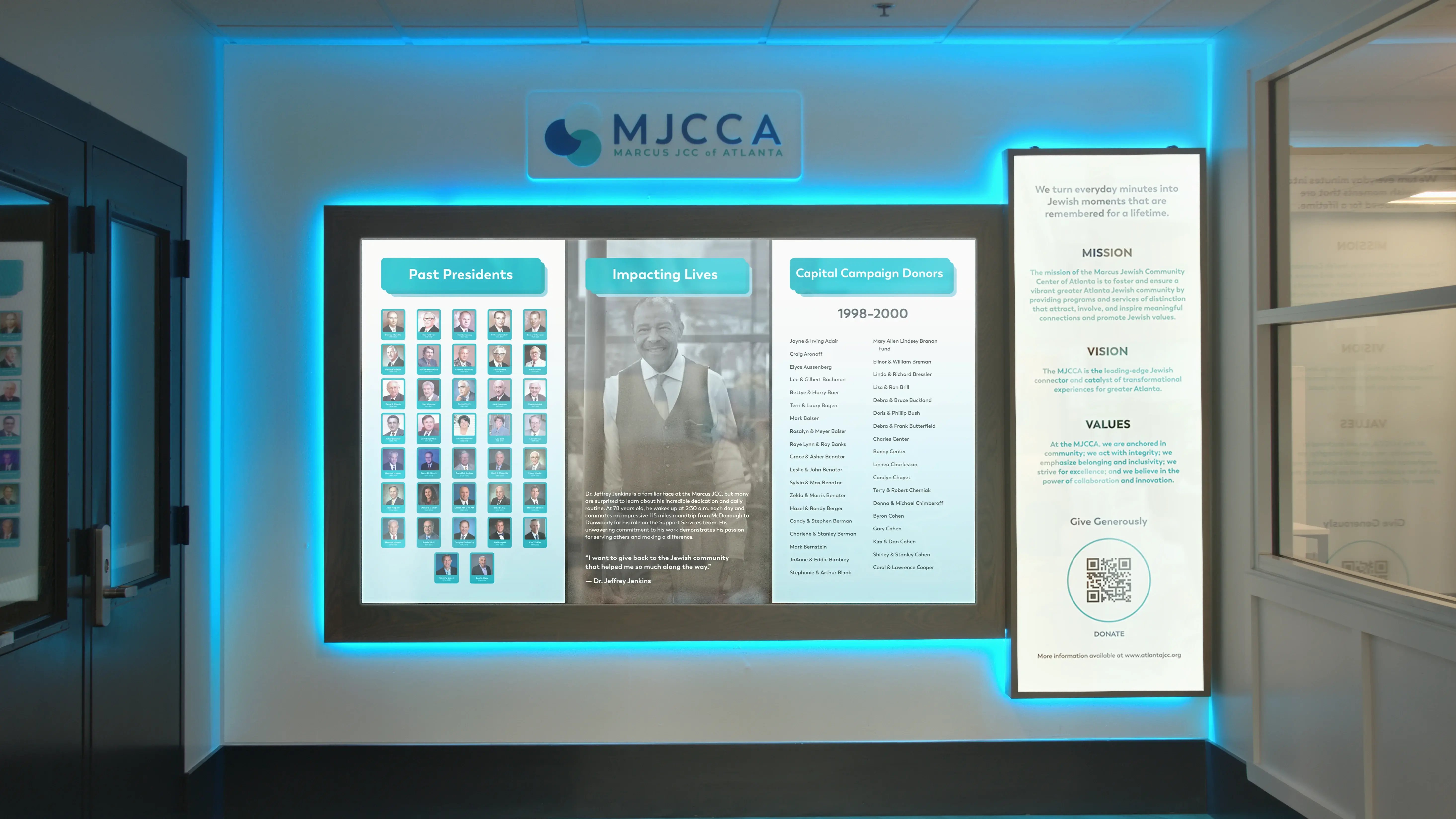
OmniAlly designed a custom enclosure built to the renovation rather than to a catalog. Three portrait displays sit behind a single dark oak frame set into an alcove off the main corridor, with a concealed LED wash that lifts the whole assembly off the wall and a backlit MJCCA logo above it. Alongside the screens, an illuminated lightbox carries what doesn't change: the organization's mission, vision and values, and a QR code for giving.
The display is deliberately non-interactive. With a preschool on site and children passing all day, a touchscreen would have been an invitation rather than a feature. The content runs on its own instead, which also means recognition reaches people who were only walking by.
Names are added from a browser in minutes. When a donor surfaces a gift from decades ago that never made it into the records, the answer is now that it can be fixed, rather than a quote for new engraving and a wait of weeks.
On the Wall
The three screens divide the work between leadership, storytelling and the donor record itself.

Past Presidents — the full line of leadership onscreen together, rather than cycling out of view.

Impacting Lives — a rotating story with a photograph and a quote in the subject's own words.
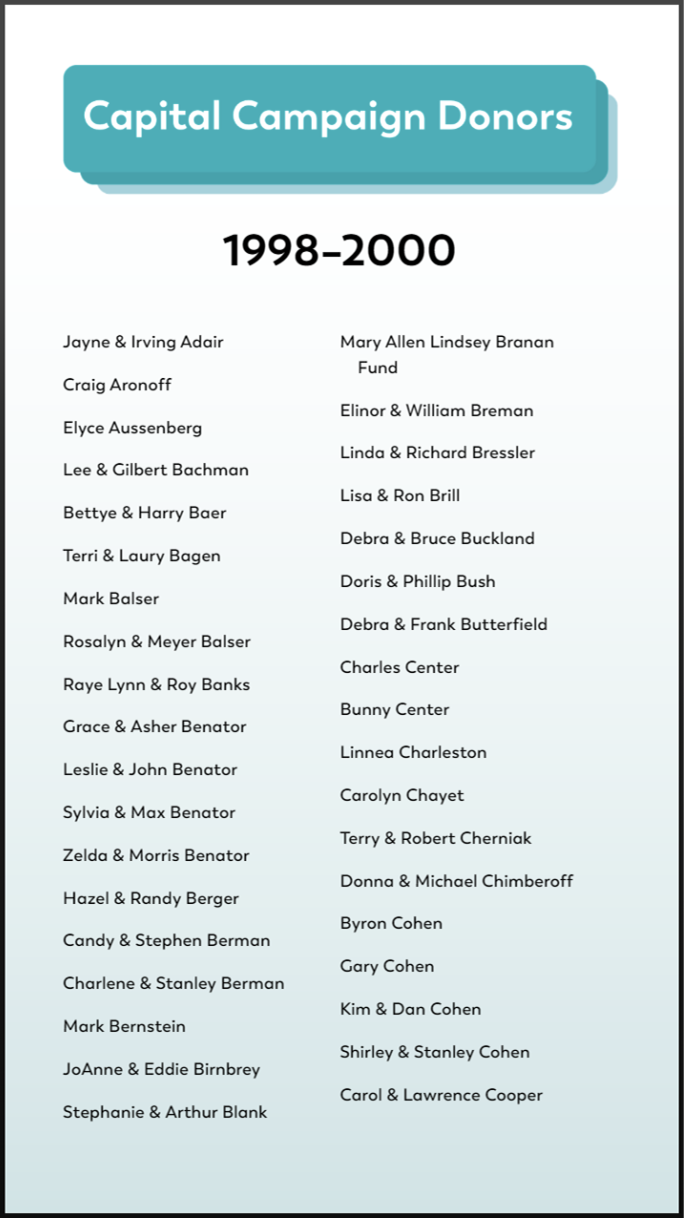
Capital Campaign Donors — a century of campaigns, organized by year.
Built Into the Renovation
The enclosure borrows from the building around it — dark oak against the new woodwork, a concealed LED wash in the organization's own blue, and a backlit logo that reads from the far end of the corridor. Beside the screens, an illuminated panel holds the content that never needs updating.