Charles H. Wright Museum of African American History
The Charles H. Wright Museum of African American History, a Cultural institution from Detroit, MI, chose OmniAlly to build their digital donor wall to replace four acrylic panels frozen on a campaign that closed in 2007.
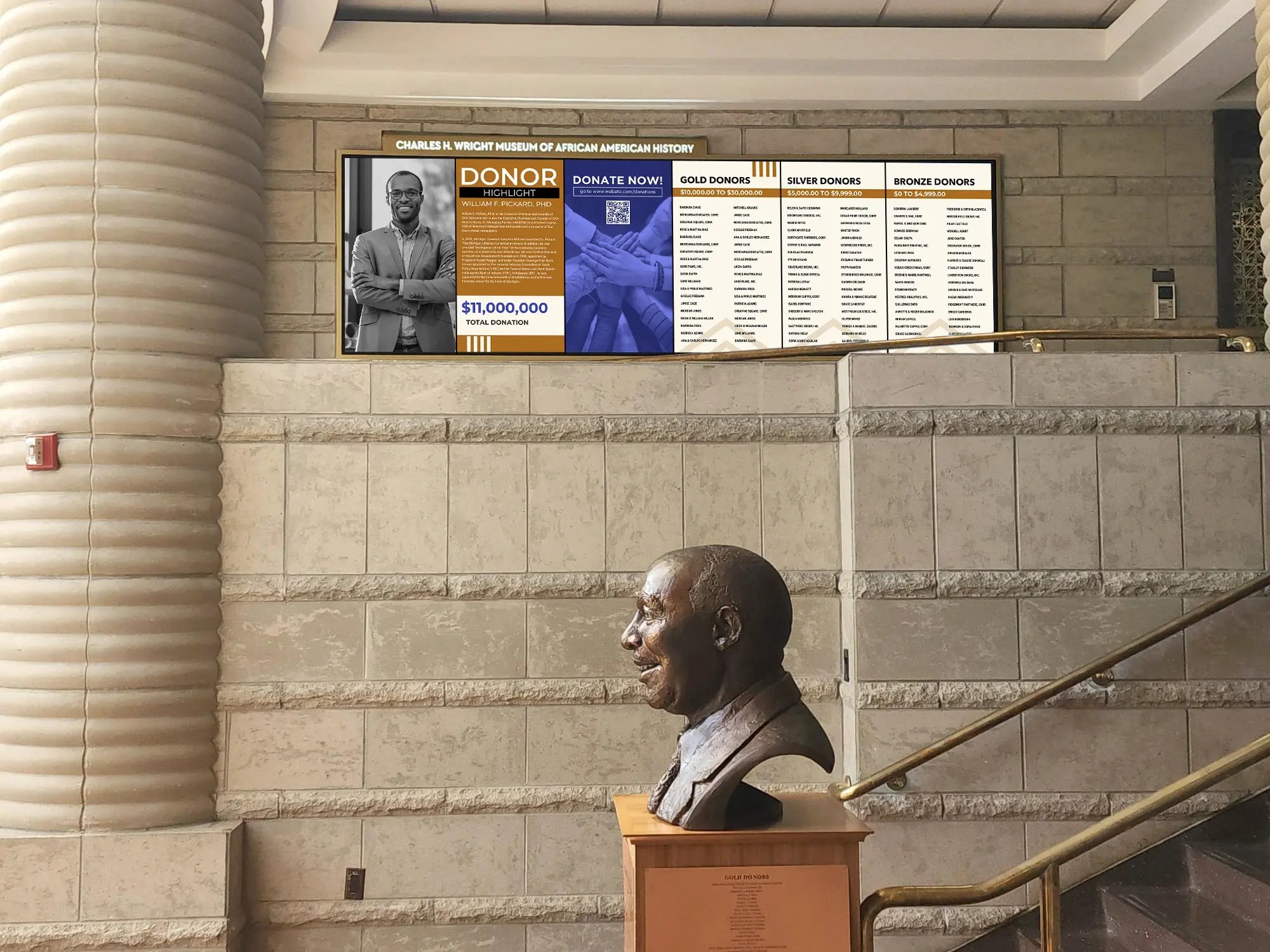
About Project
One of the world's great collections devoted to the African American experience — and a donor wall that stopped in 2007. The Charles H. Wright Museum recognised its supporters on four acrylic panels in the rotunda. They listed a single capital campaign, and that campaign had closed in June 2007.
Fourteen years of generosity had nowhere to appear, and adding one name meant reprinting a panel. The museum asked for recognition it could keep current itself. What it got does a great deal more than that.
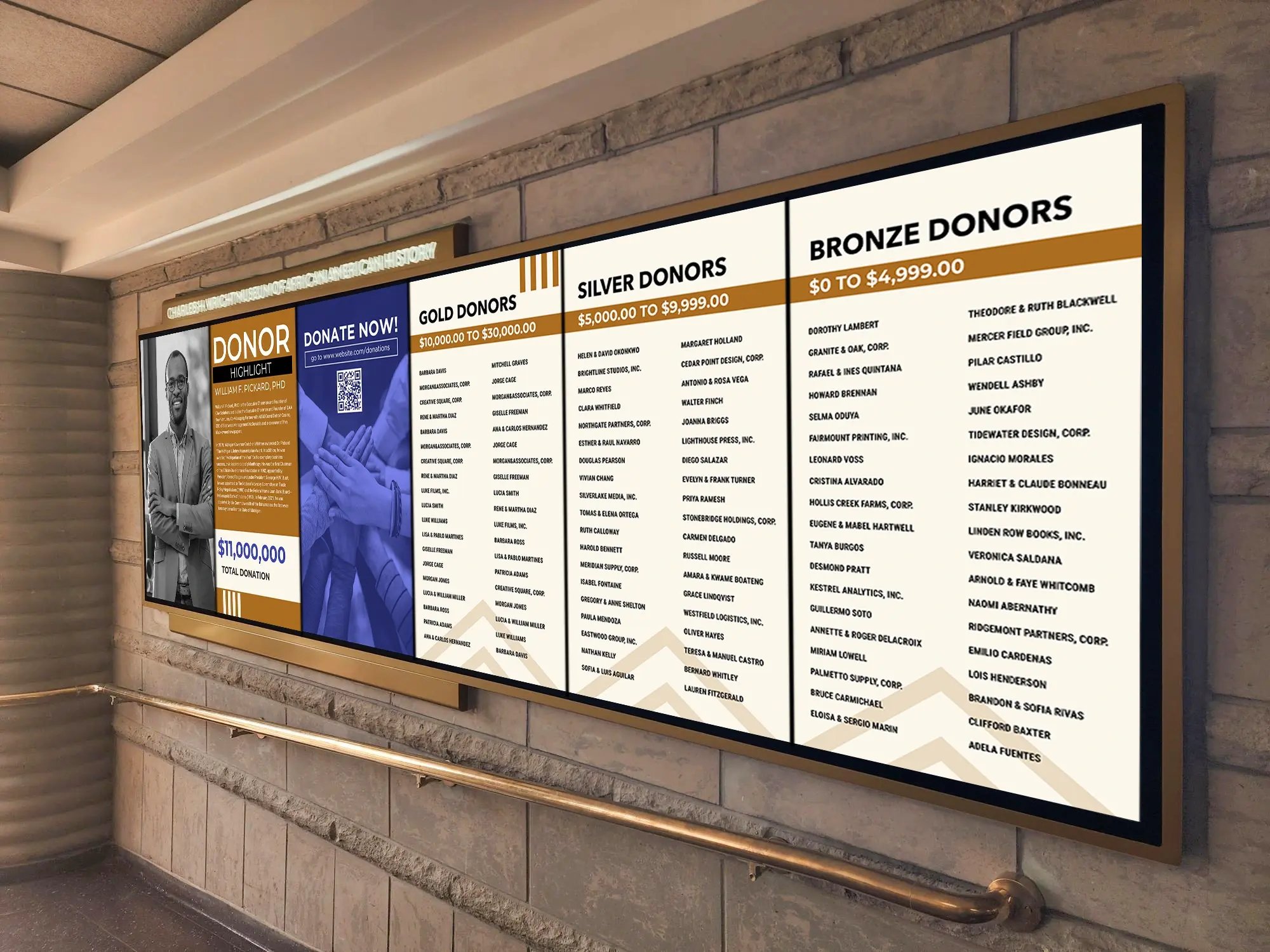
Recognition Challenges
In May 2021 the museum's Friends Committee asked for a donor display board. The brief was simple. The building was not.
Key challenges included:
-
Recognition frozen at a campaign that ended in 2007, with fourteen years of giving unacknowledged
-
A listed-quality interior of cast stone, brass handrails and period sconces that would not tolerate a generic screen
-
An ADA limit of four inches on protruding objects, in a corridor that doubles as an accessible ramp
-
A museum audience including school groups, so any glass surface had to survive contact
-
Ambition that grew mid-project, from a single display board to a six-screen video wall
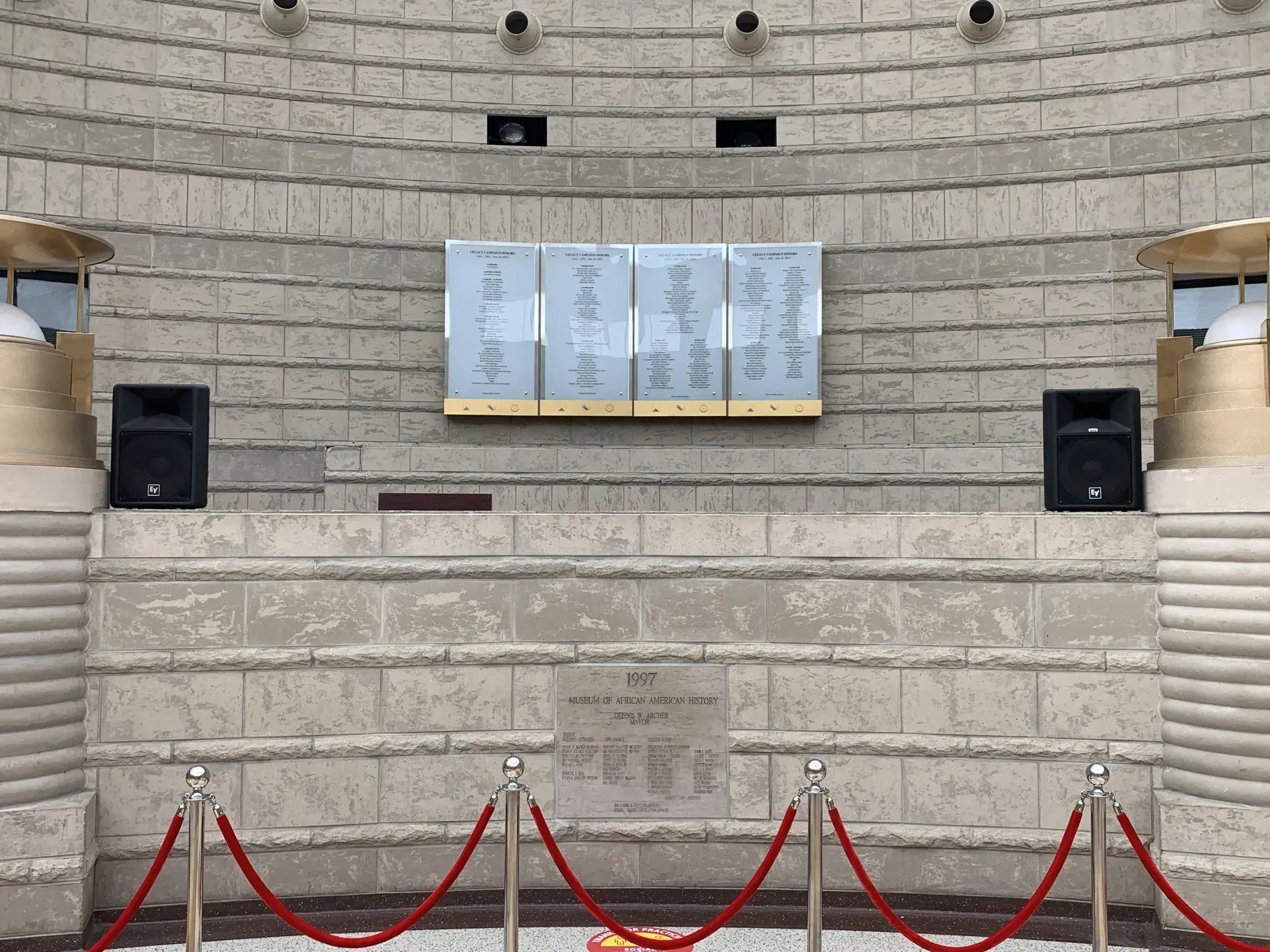 Before
Legacy Campaign Donors, July 2002 to June 2007. Adding a name meant reprinting a panel.
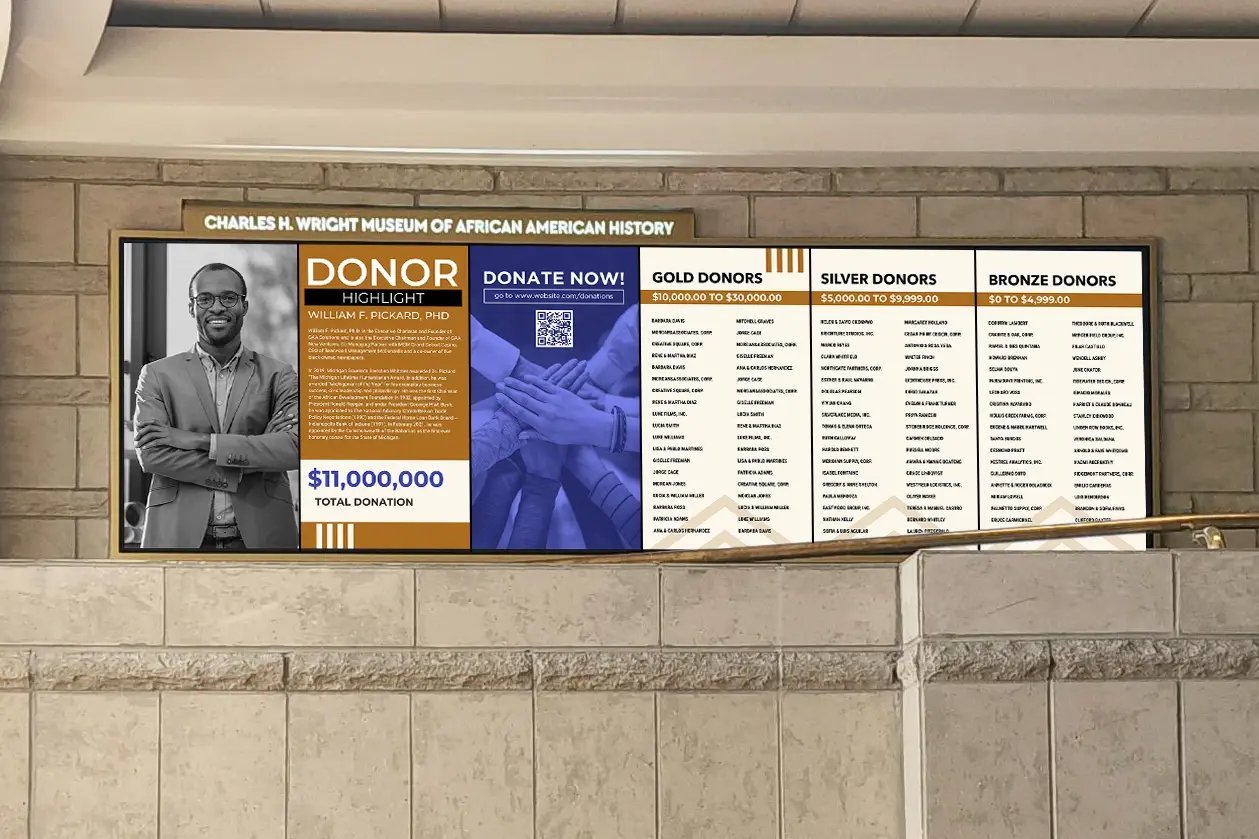 After
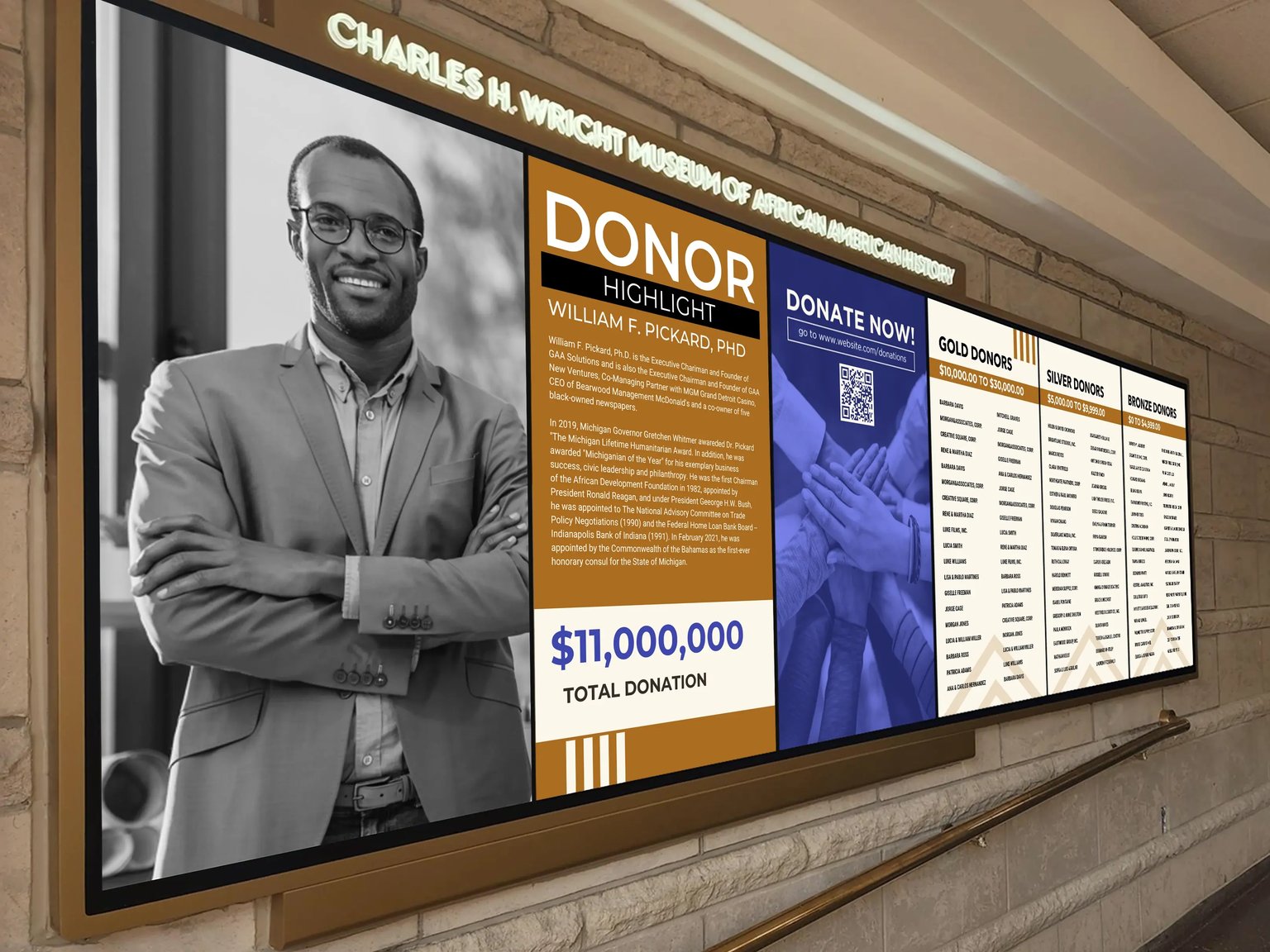
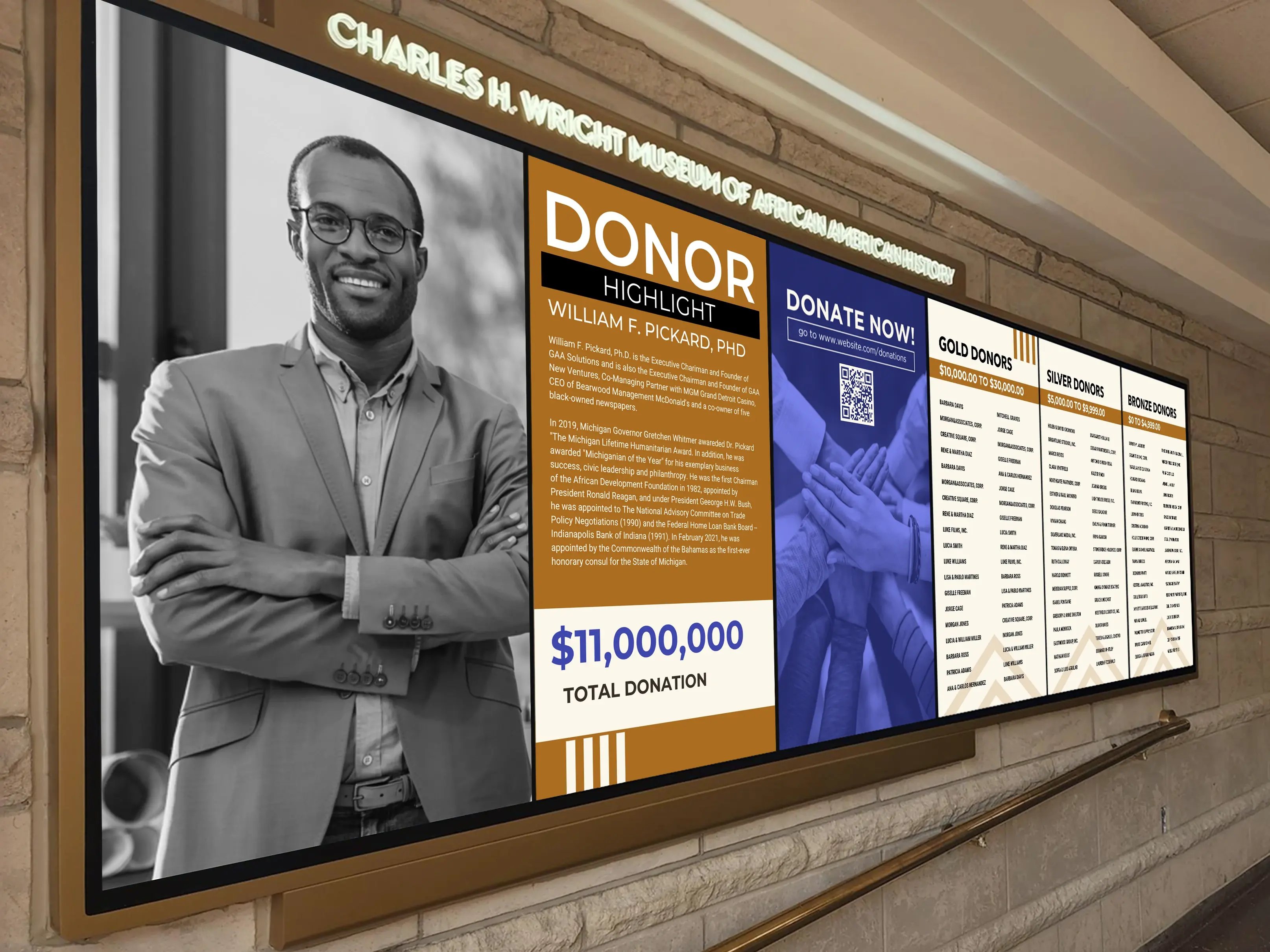
Six screens behind a brass-finished enclosure, installed June 2022.
Our Solution
Six 49-inch commercial displays in portrait, side by side, forming a single surface twelve feet wide. A hand-finished aluminium enclosure in brass. The museum's name above it in illuminated push-out letters. Nothing about it reads as a screen bolted to a wall.
Two removable shields with passive airflow slots protect the screens without hiding them. The Wright hosts school groups daily. The wall is built to be touched.
Design was developed in partnership with IKON.