Springpoint Foundation
Springpoint Foundation, a Senior Living institution from Wall Township, NJ, chose OmniAlly to build their digital donor wall for a new interfaith center — and then rolled the same system out across all eight of their communities.
About Project
Springpoint runs eight senior living communities. The donor recognition programme now spans all of them — and it started as a single wall in a new interfaith centre.
The Foundation came to OmniAlly with one project and an open question behind it: if this works, could it work everywhere?
Recognition Challenges
The audience set the brief. A donor wall in a senior living community has to be legible, reachable and genuinely simple, or it becomes furniture within a fortnight.
Key challenges included:
-
An interactive system that had to be intuitive for residents, with no scrolling, pinching or hunting
-
ADA reach limits governing how high anything touchable could sit on the screen
-
Contrast and type sizing that had to work for older eyes, in rooms with varied lighting
-
Finishes that would survive daily contact with walkers and scooters
-
Eight communities needing one recognisable system, each with its own donors, events and character
-
A Foundation team small enough that the whole thing had to be maintainable centrally
One Design, Eight Communities
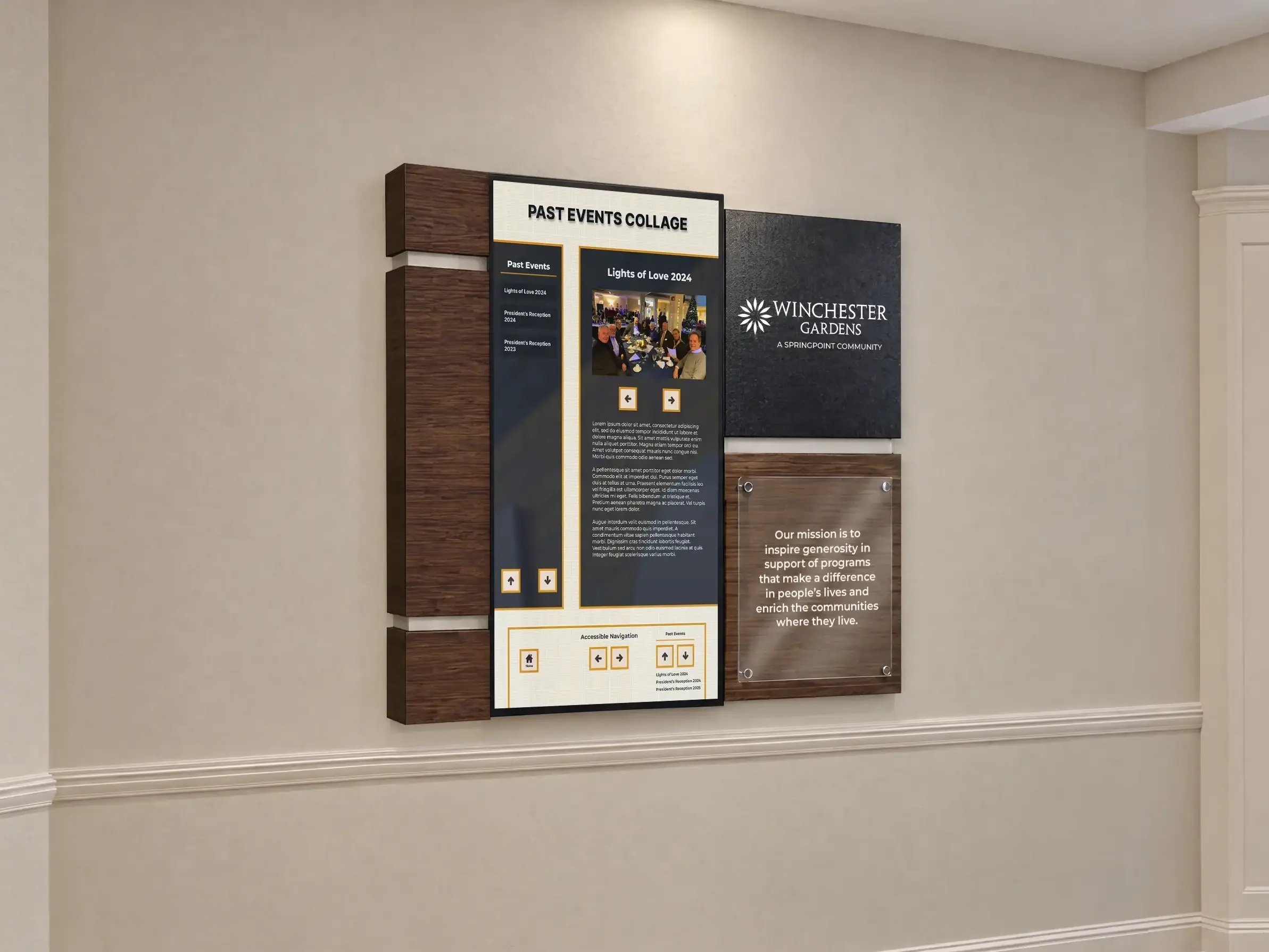
This is the part that made the programme work. We designed the first community in full — the layout, the navigation, the content templates, the cabinetry — and then rolled that same framework out to the rest, personalising each one rather than rebuilding it.
Each community keeps its own donor lists, its own events, its own stories and its own name on the wall. What they share is the structure underneath. A resident who visits a sister community recognises the system immediately. More to the point, the Foundation team manages eight walls without learning eight different ones.
It also changes the economics. Each location after the first costs less to design and takes less time to deliver, because the thinking has already been done.
Winchester Gardens
Maplewood, NJ
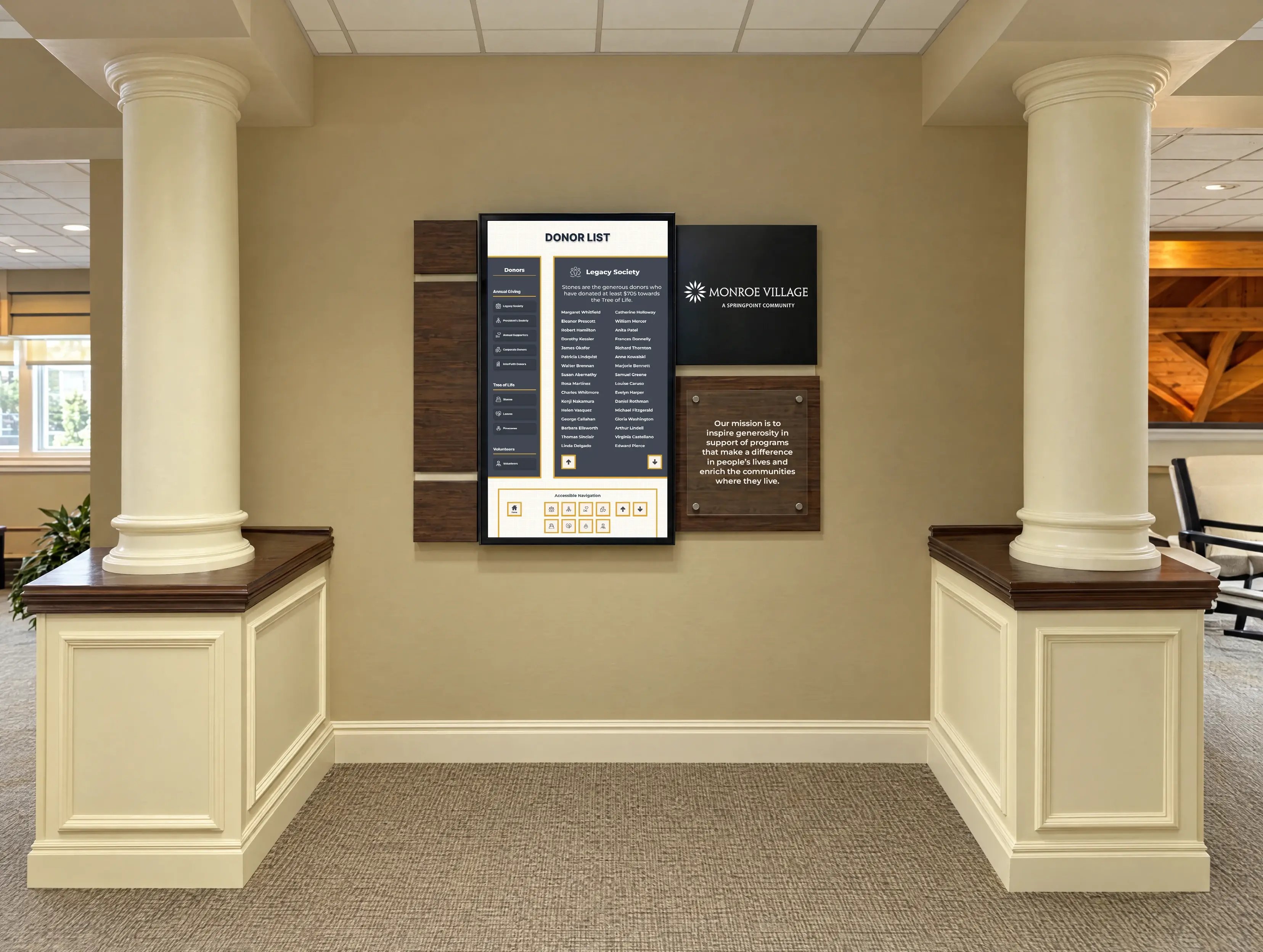
Monroe Village
Monroe Township, NJ
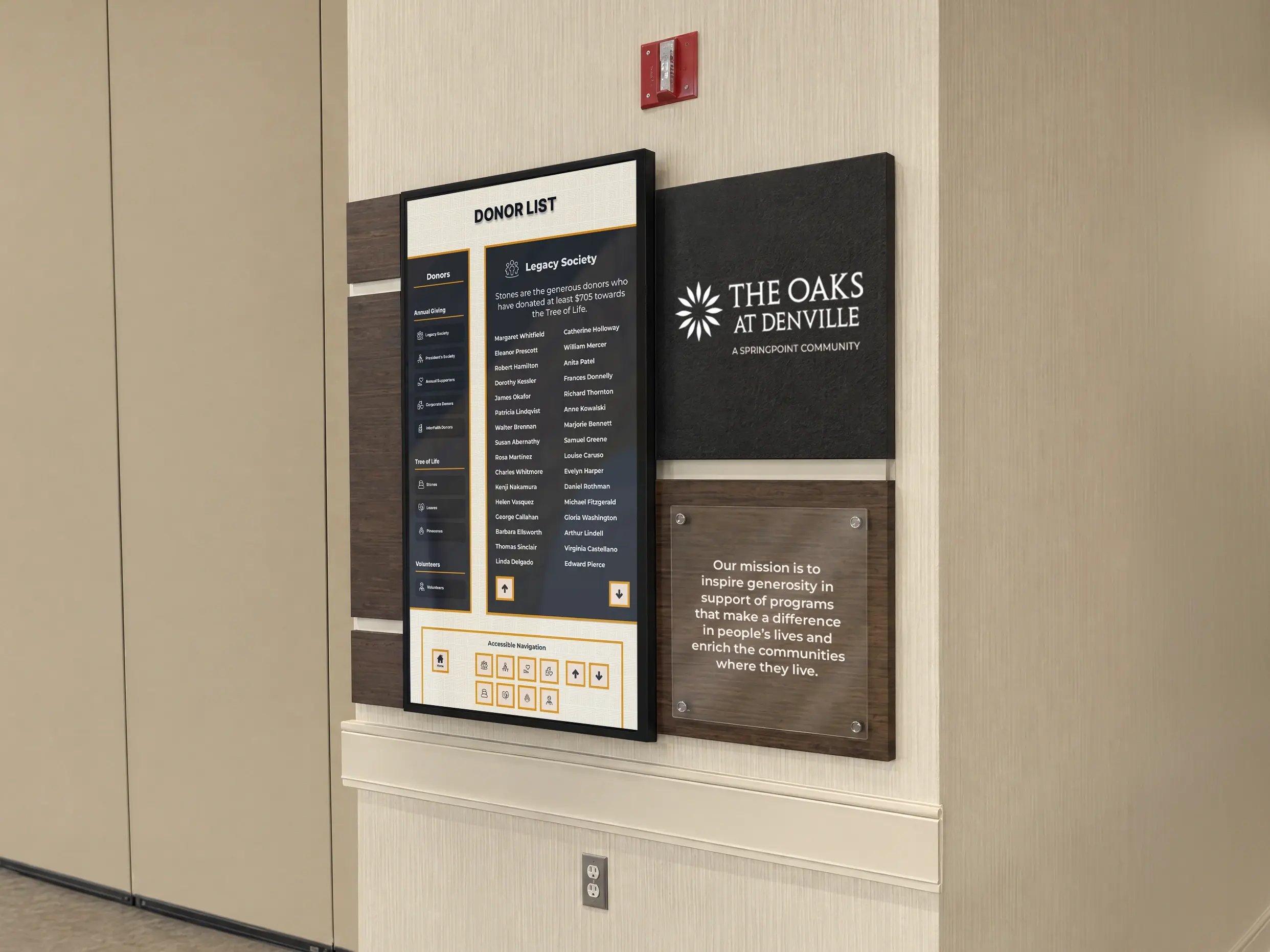
The Oaks at Denville
Denville, NJ
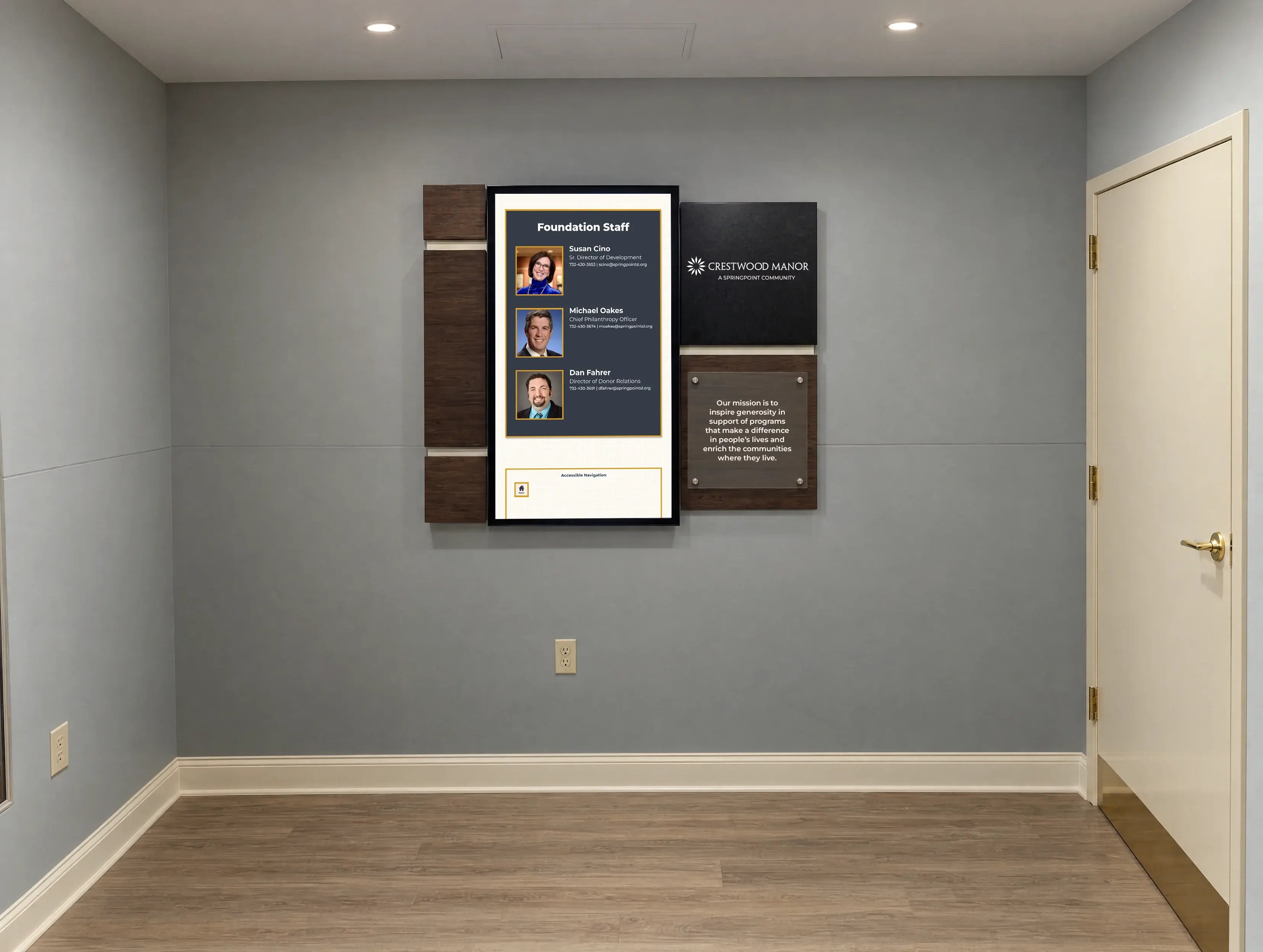
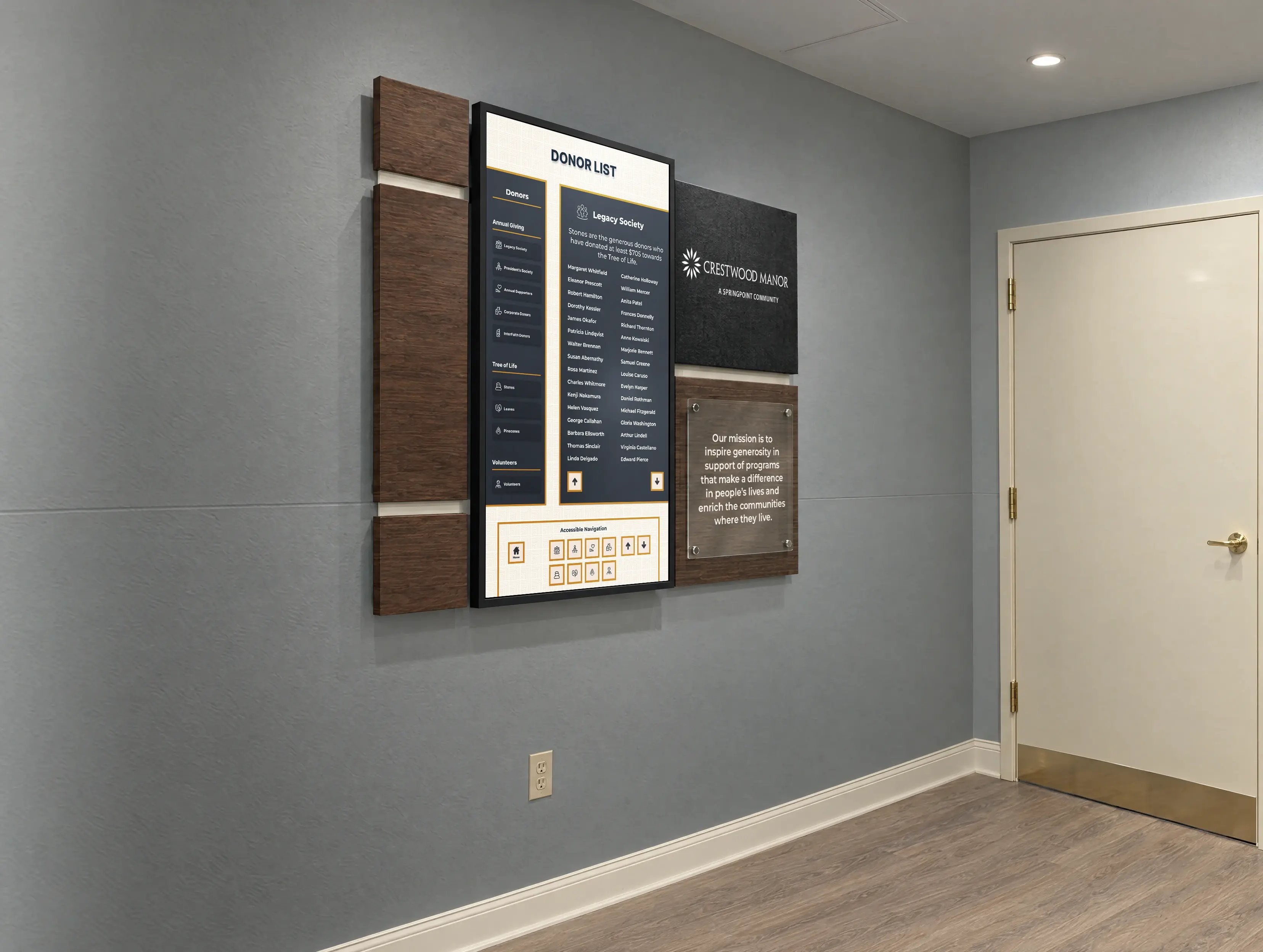
Crestwood Manor
Whiting, NJ
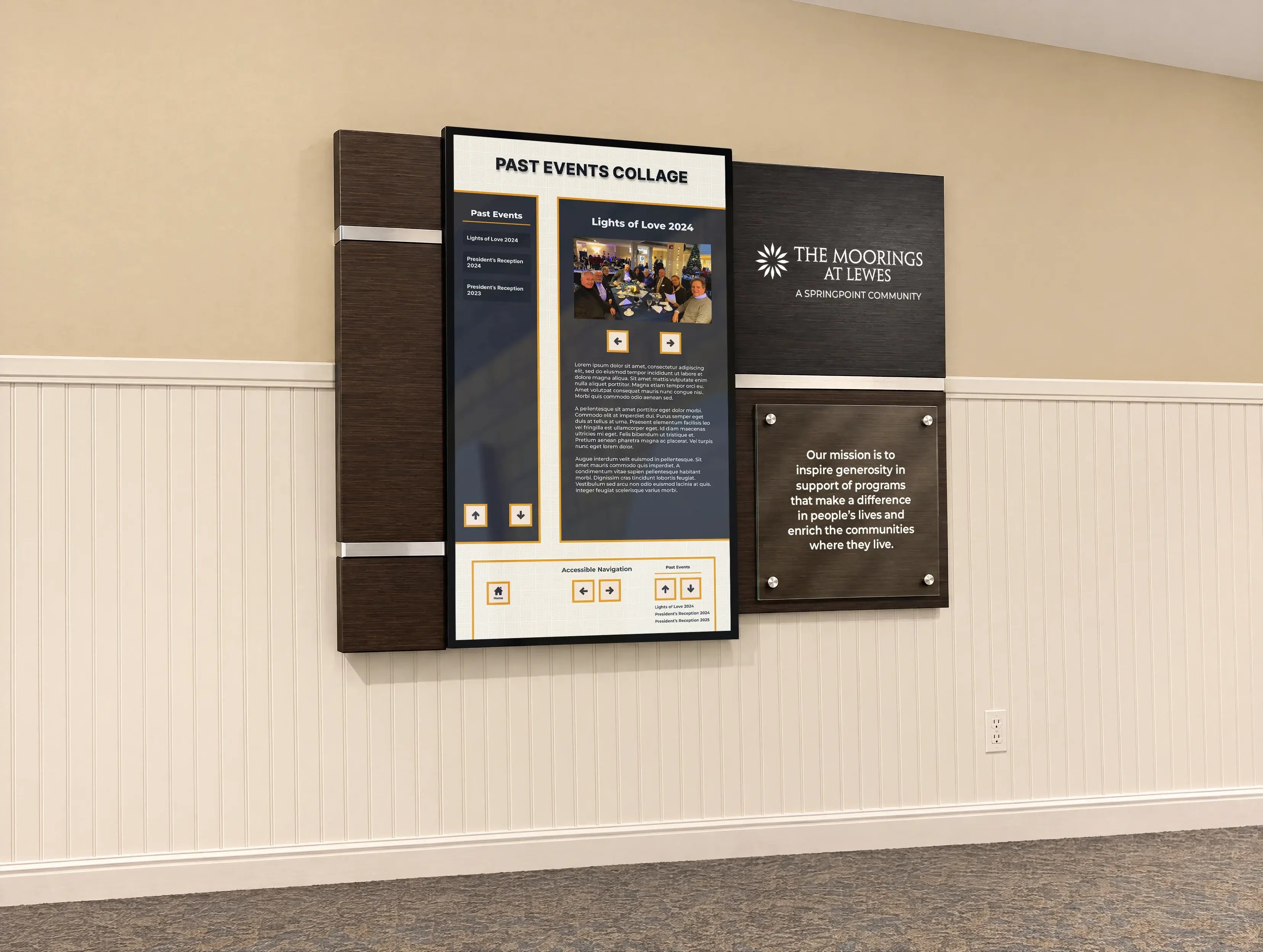
The Moorings at Lewes
Lewes, DE
Our Solution
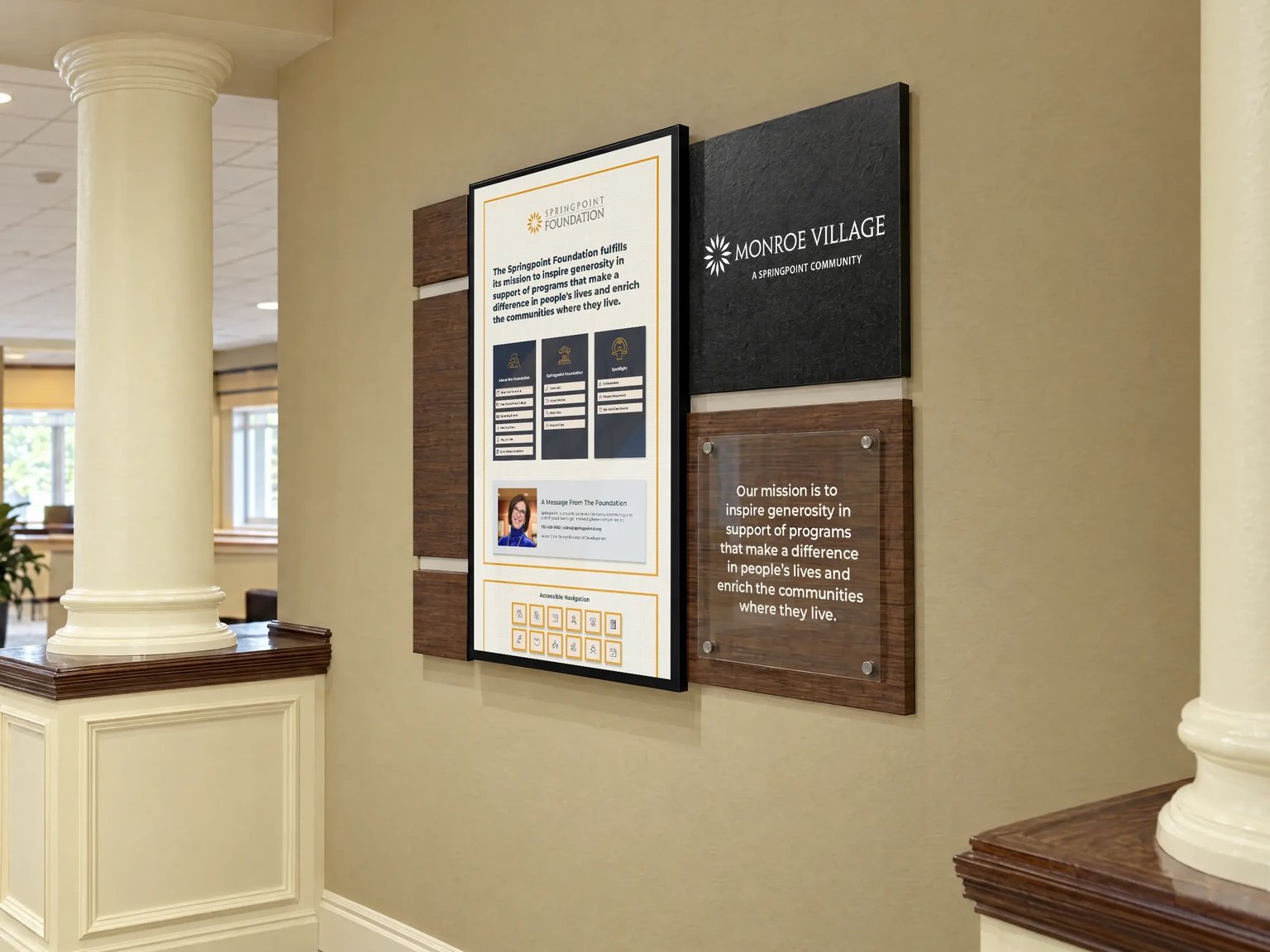
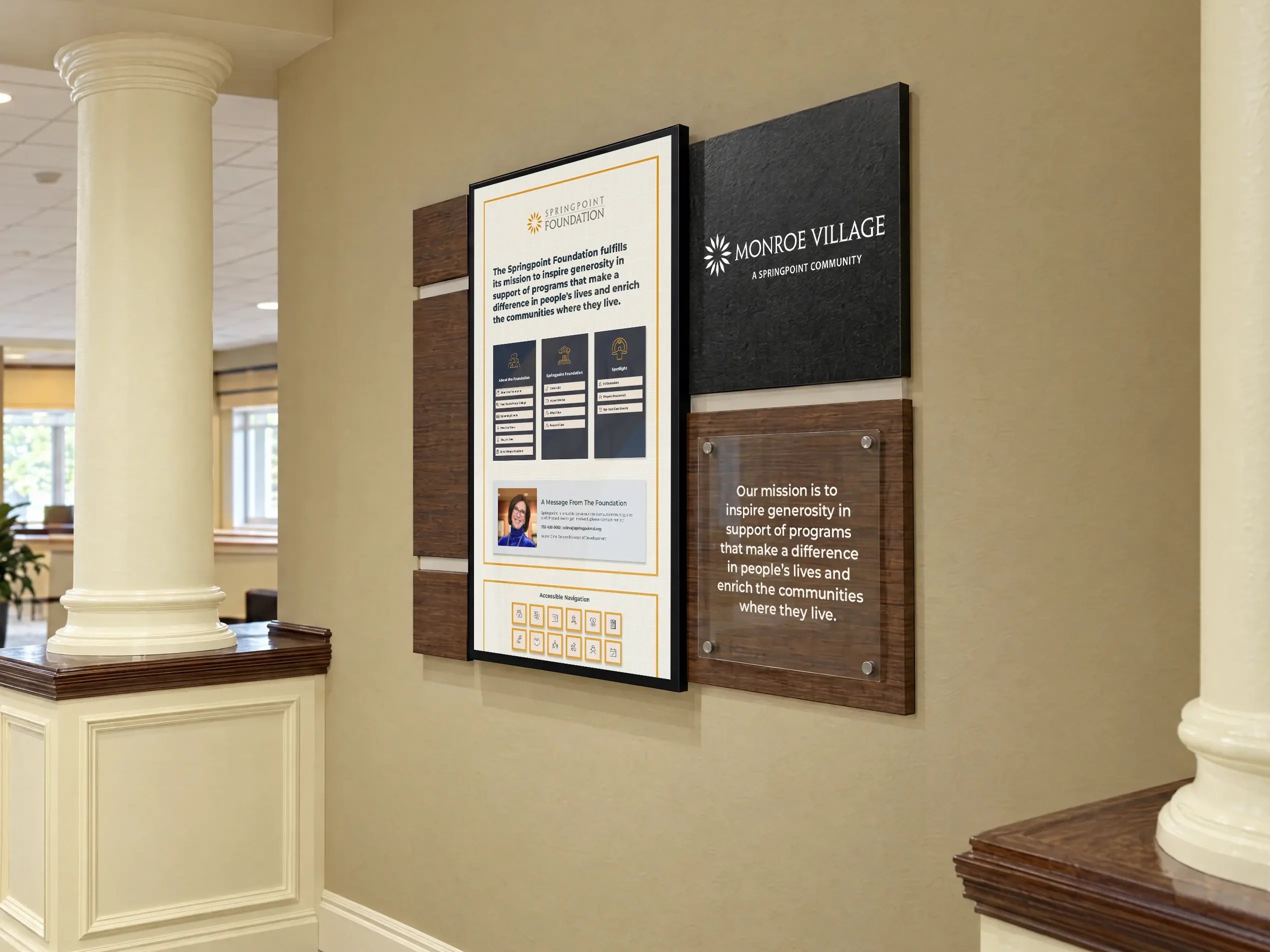
A portrait touchscreen set into a wall composition rather than hung on its own. Dark wood panelling runs behind and beside it, carrying the community's own identity on one panel and the Foundation's mission on a clear acrylic plaque mounted proud of the wood. It reads as part of the wall, not as a television someone added later.
Putting the mission on a permanent plaque matters more than it sounds. The wall still says what the Foundation is for while a resident is three screens deep in something else.
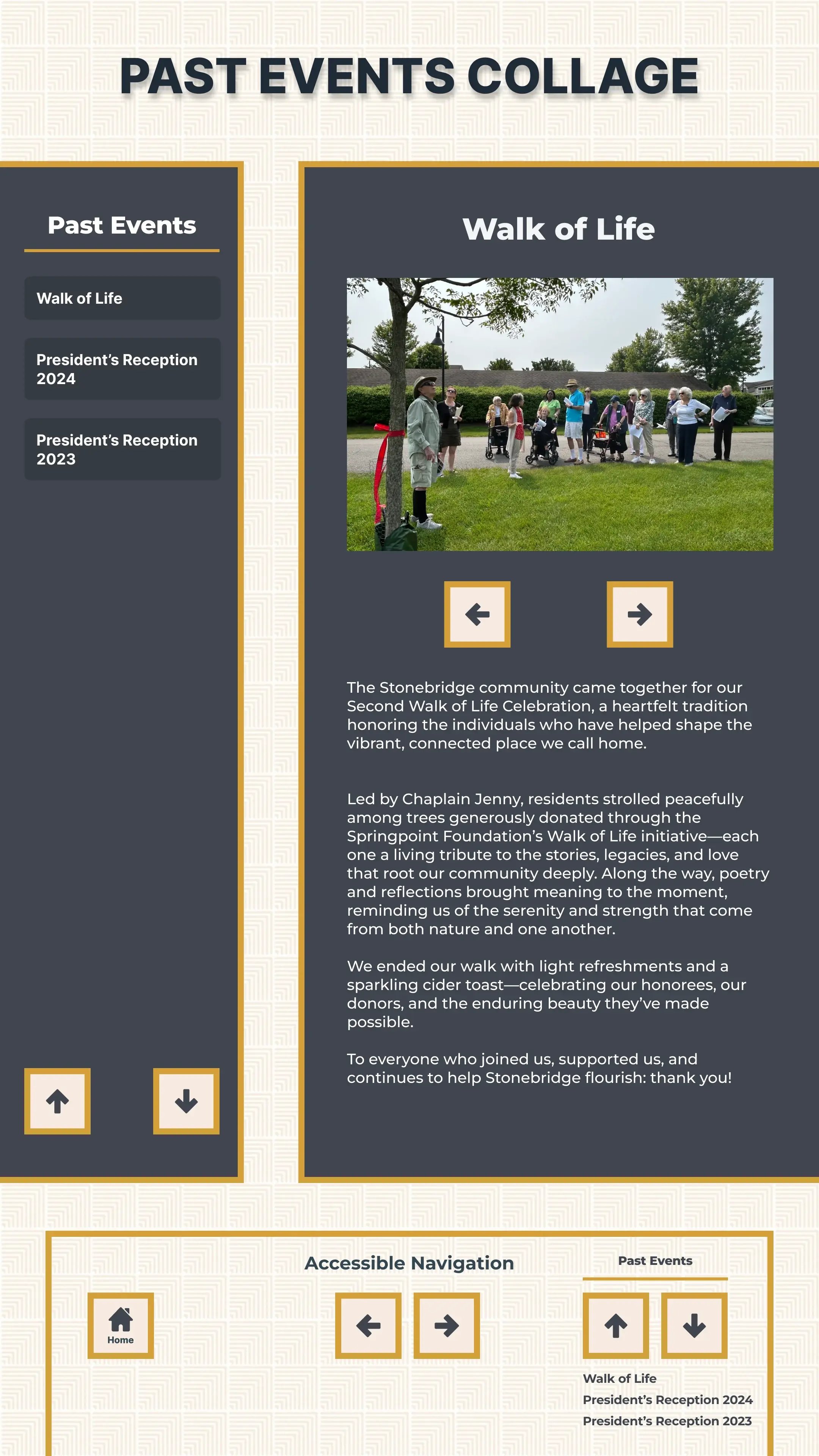
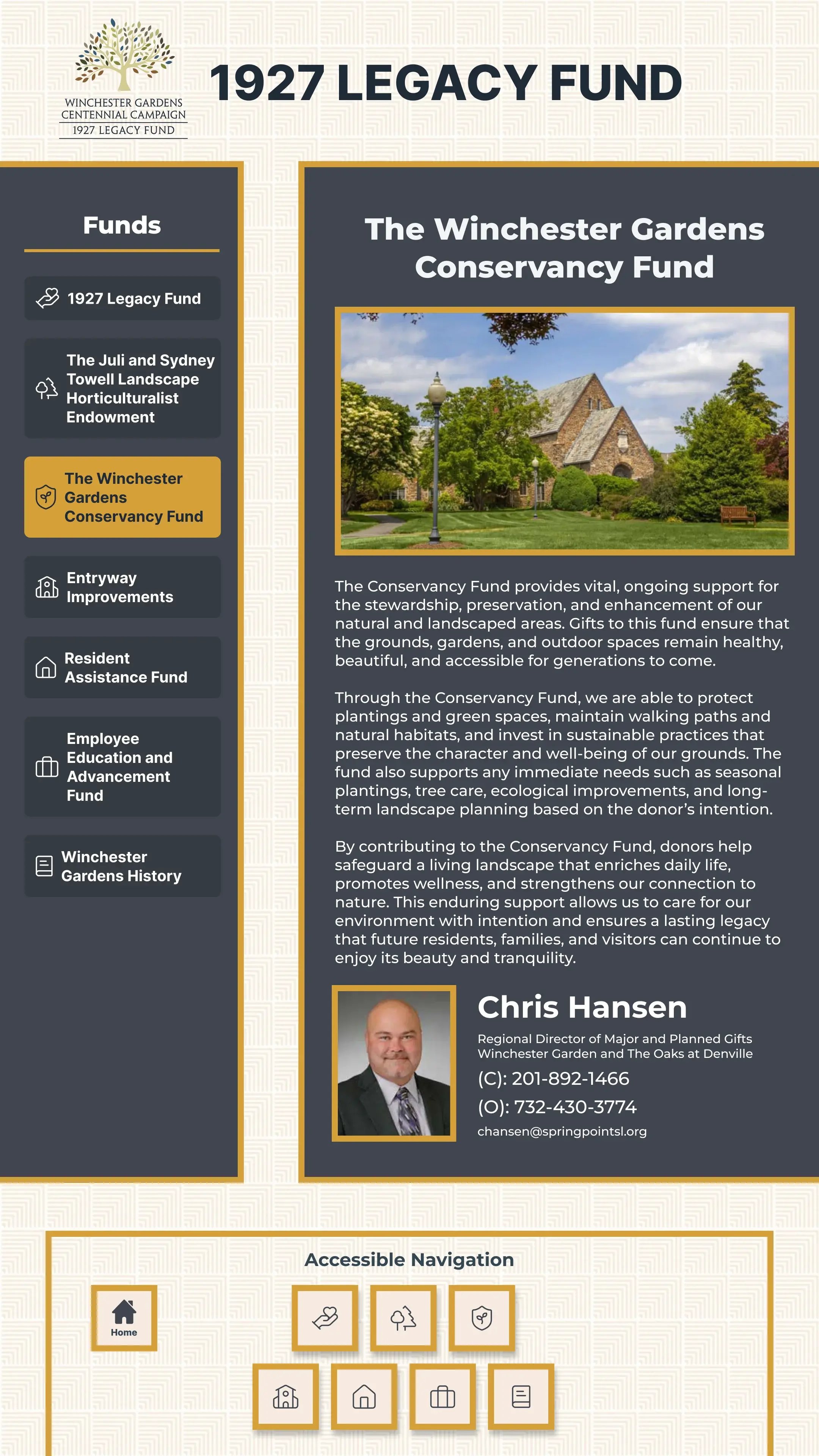
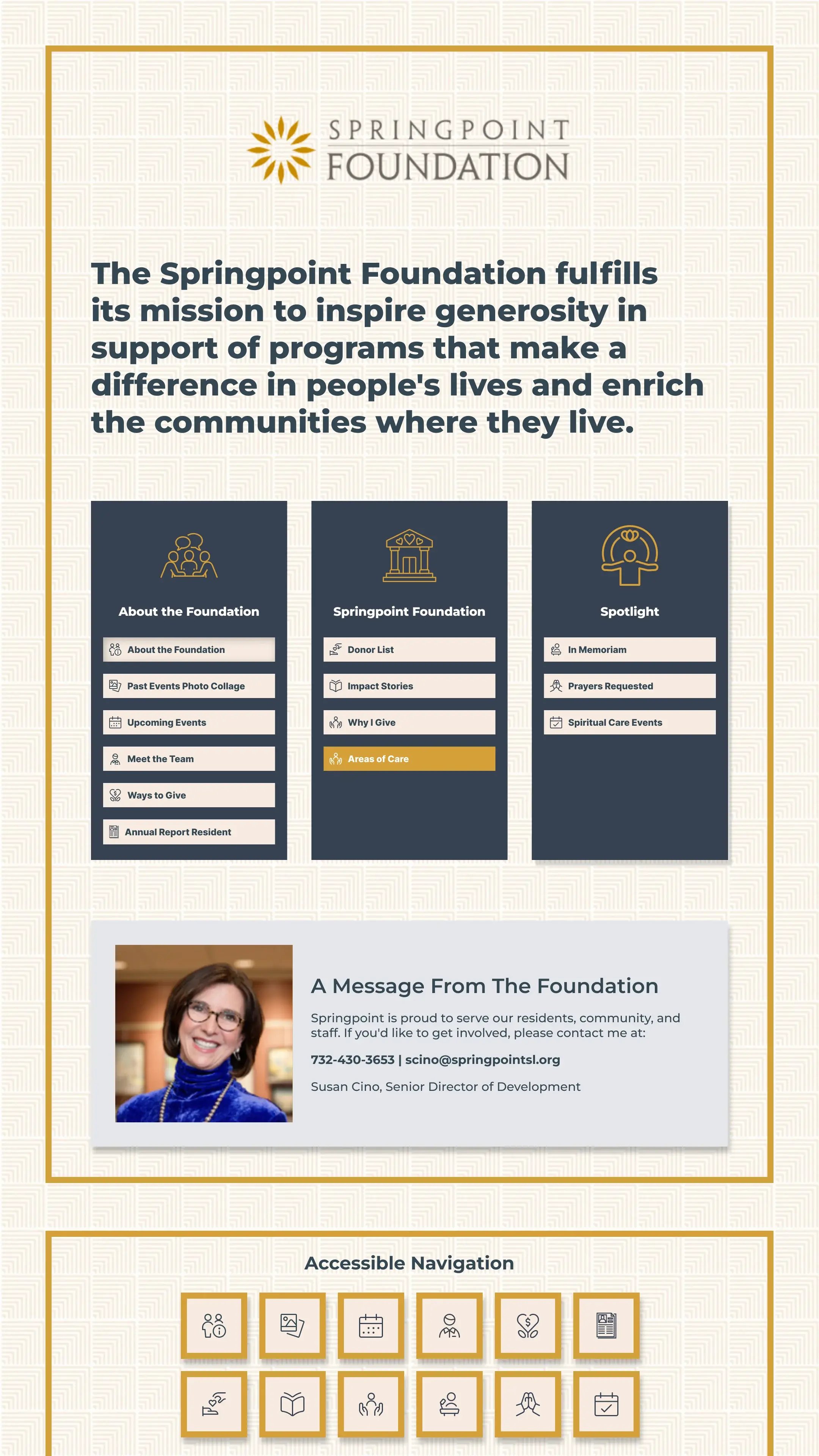
Accessibility shaped the interface, not just the mounting height. A row of labelled icons runs along the bottom of the screen, so every destination is reachable from a seated position and nothing a resident needs sits above shoulder height. Where a feature couldn't be made reachable — a gift annuity calculator, for instance — it moved to a QR code rather than being cut.
More Than a Donor List
The donor list is one tab among many. The rest is what gets residents to walk up to it in the first place.
A note from the chaplain. Prayer requests. In memoriam pages that stay available rather than disappearing after a week. The interfaith centre schedule, showing today alongside the rest of the week. Events from the resident philanthropy committee. A Tree of Life rebuilt digitally, where a physical one had been taken down. And ways to give that go beyond cash and cheque — charitable gift annuities, bequests, and the refundable entrance fee that most residents don't realise they can donate.
There is also a message from the Foundation on the home screen, carrying a named person, a direct line and an email address. A resident who wants to talk to someone doesn't have to work out who.
Why I Give stories run on the attract loop, so the screen has something to say to someone who never touches it.
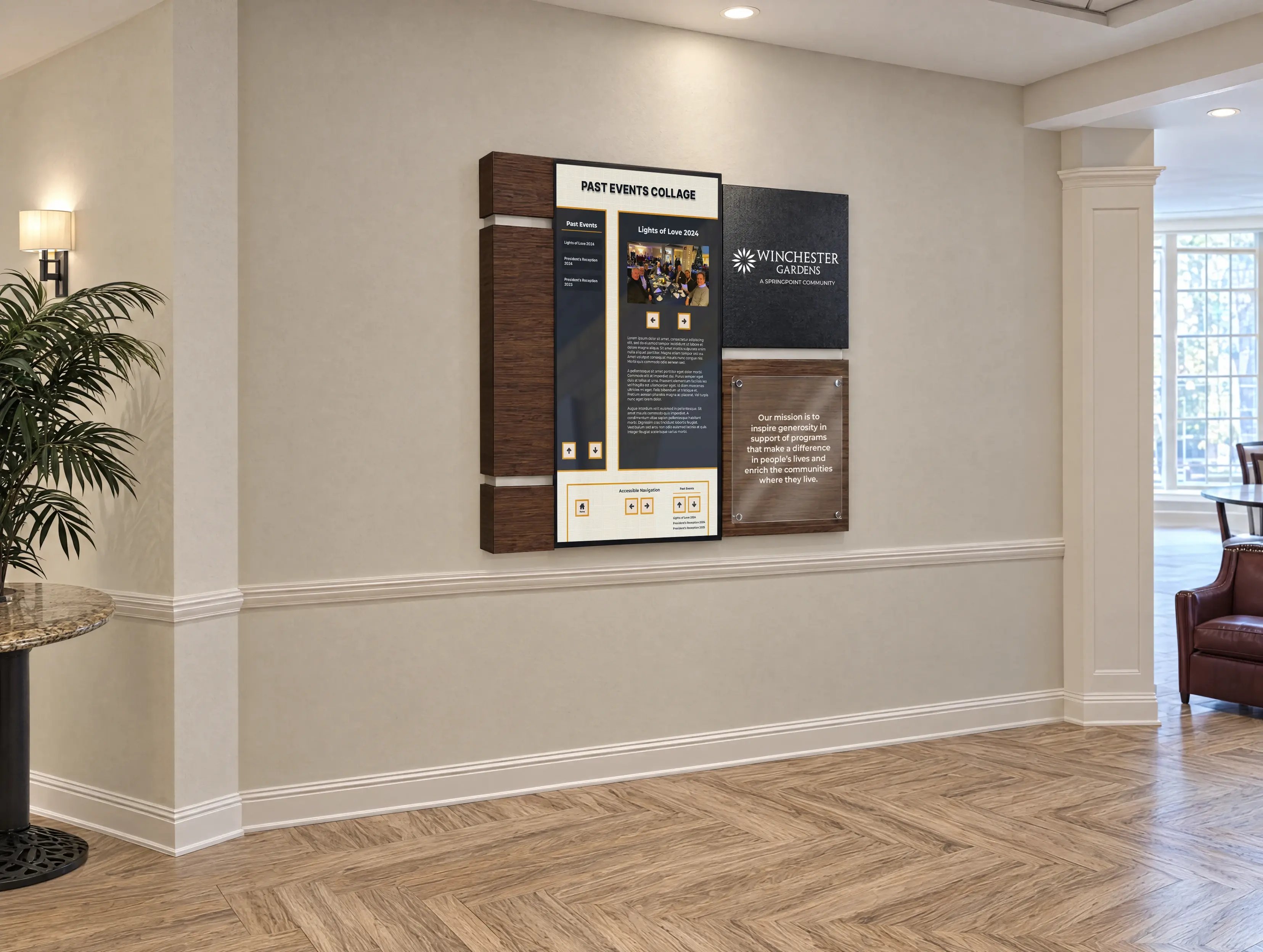
the same system, personalised to each community.
Knowing Whether It Worked
A donor wall is easy to buy and hard to justify, because almost nobody can tell you what it returned.
Springpoint uses the Targeted Donor Retention method, which OmniAlly developed and teaches to clients. Rather than trying to attribute a year's giving to a wall, it works on a defined pool: pick a group of donors, reach out to them for Why I Give stories, and measure that group's retention against its own historic rate. The donors you keep above that baseline are the ones the wall earned.
It turns a vague investment into a number the Foundation can take to its board.
What Changed
One project became a programme. What began as a single wall in a new interfaith centre now spans the Springpoint network, with each community added faster and more cheaply than the last.
Recognition became a reason to stop. Residents use the screens for the chaplain's note, for prayer requests, for remembering neighbours who have died. The donor list benefits from the traffic everything else brings.
Giving options got airtime. Gift annuities and refundable entrance fee donations are difficult to raise in conversation and easy to surface on a screen.
The Foundation can measure it. Not an impression that it's working, but a retention figure attached to a named pool of donors.